Showing posts with label ruby-throated hummingbird. Show all posts

Sunday, December 31, 2023

Mid July - Early September, 2023

2023 is almost over, so it's time to finish catching up with this year's sights from around our property! In the previous post, we got up to the middle of July. Let's take it from there! This post shares some highlights from the rest of summer in our yard, meadow, and woods; and then I'll finish up the year (fall and early winter) in another post.

Late in the afternoon on July 29, I heard some strange noises and saw flashes of a small long mammal darting between clumps of brush in our yard. The daylight was fading, but I grabbed my camera anyway, because I'd never seed a weasel-type creature in our yard before. (All previous sightings on our property have been courtesy of the trail camera in the woods.) Sneaking around the area, I must have accidentally ended up in the creature's intended path, because a Long-tailed Weasel came directly toward me, suddenly found a human blocking its way, and dropped the baby rabbit it was carrying at my feet. I guess we were both surprised! I backed away a bit, and the weasel came back and snatched up its meal again:

The weasel carried the rabbit to a spot behind our shed, and then it came back along the same route and repeated the process at least five more times (I lost count) while I watched from nearby. That's a lot of baby rabbits! I was wondering at the time whether the weasel could have been gathering food to feed its own young, but I've also read that weasels sometimes cache food -- more than they can eat at one time -- so maybe that's what was happening here. In any case, it was pretty amazing to see this confident and capable little hunter at work! All my picture attempts were blurry, but this gives an idea of the action at least:

While all this was happening, a Mourning Dove was watching from its nest in a tree right over the weasel's path:

Yikes, being a nesting bird sure seems perilous. Here's another picture of this Mourning Dove the next day, in better light -- this nest didn't ultimately succeed, and I don't know whether that was because of the weasel, or another predator, or some other hazard:

I had a lot of fun this summer trying to take pictures of Ruby-throated Hummingbirds as they visited the various hummingbird-friendly flowers in our yard. I don't keep hummingbird feeders, but it turns out that many of the (mostly native) flowering plants I've added to our property over the years (and some of the annual flowers I grow, too) are great feeding stations for these lovely little birds. It seemed like we had hummingbirds around pretty much all the time this summer, so there were lots of opportunities for pictures.

The big orange flowers on our Trumpet Creeper vine are always a big hit with the hummingbirds (and there are always many big black ants on these flowers, too) -- here's a hummingbird visiting these flowers on July 30:

I've noticed that hummingbirds visiting Trumpet Creeper flowers tend to leave with white foreheads, thanks to a generous dusting of pollen:

The Scarlet Runner Beans I grew in my vegetable garden this year were also popular with the hummingbirds, and I so loved having these birds come visit while I was in the garden. Here's the same bird from the above pictures again, now shifted to Scarlet Runner Bean flowers (also on July 30):


And here's a closer picture of another bird on August 13:

After visiting the bean flowers, this hummingbird perched for a bit on top of a post in the garden (I wonder what all that white stuff is along the top of its beak):

Look, a hummingbird tongue! Wow, what a cool little bird:


Ever since I planted Cardinal Flowers in our yard back in 2017, I've been hoping to get a good picture of a hummingbird visiting these flowers, and I finally managed it this year by peeking through our living room window and using our house as a blind on August 13:

Ah, I love these flowers, and it's so awesome to see them with their primary pollinator. And this was the first time I really got to see this flower's pollination mechanism at work! While the hummingbird drinks, the flower gives it a little pat on its head -- soooo cool:


The Coral Honeysuckle I planted in our yard last year bloomed for the first time this year, and the hummingbirds were very much into these flowers, too. Here's a bird visiting these flowers on September 4:

This bird was even able to perch on the honeysuckle's vine while feeding from these flowers:


What a sweet bird:


And here's one more picture from September 4, since this bird's feeding route also included the nearby New York Ironweed flowers:

There are always tons of flowers around here during the summer, and here's a small selection of some other blooming plants that caught my attention this year. Enchanter's Nightshade (Circaea canadensis) grows in our woods, and I love its dainty flowers and its whimsical name; this picture is from July 21:

Narrow-leaved Meadowsweet (Spiraea alba) -- also pictured here on July 21 -- produces its puffy sprays of white flowers at the back edge of our meadow:

Pokeweed grows abundantly in our yard and meadow, and birds enjoy its purple berries in the fall; I admired these Pokeweed blossoms on July 26, with white spheres opening to reveal green globular structures:


And a bee was also enjoying these pretty Obedient Plant flowers in our front yard on August 13:


And here are a few more assorted sights!

A juvenile (pink mouth) and adult (dark mouth) Blue Jay making a noisy scene in the yard on July 20:


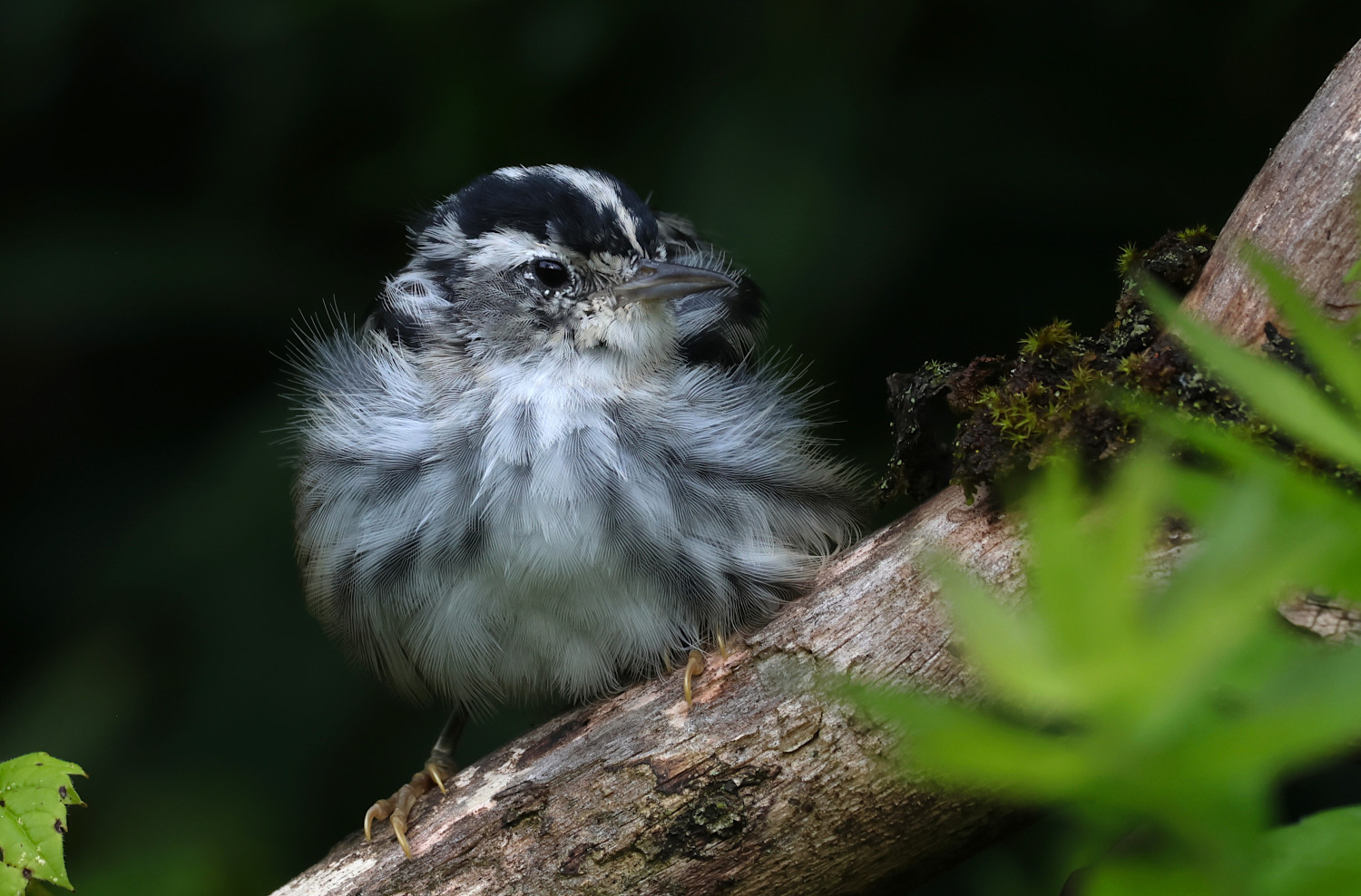
A very puffy Black-and-White Warbler that let me approach unusually close on July 21 -- I hope this bird was OK! It moved along soon after I took this picture:

A couple of Red Efts (juvenile Red-spotted Newts) ambling over the ground in the woods, this one on July 21:


And this one on August 13 (I have a hard time resisting an opportunity to hang out with these little creatures!):


Bunches of abundant Chokecherry (Prunus virginiana) berries on July 21:


A young American Bullfrog at the small pond in our woods on August 13:


A fantastically strange female American Pelecinid Wasp (Pelecinus polyturator) in our yard on August 23:


Here's another view of that same wasp:


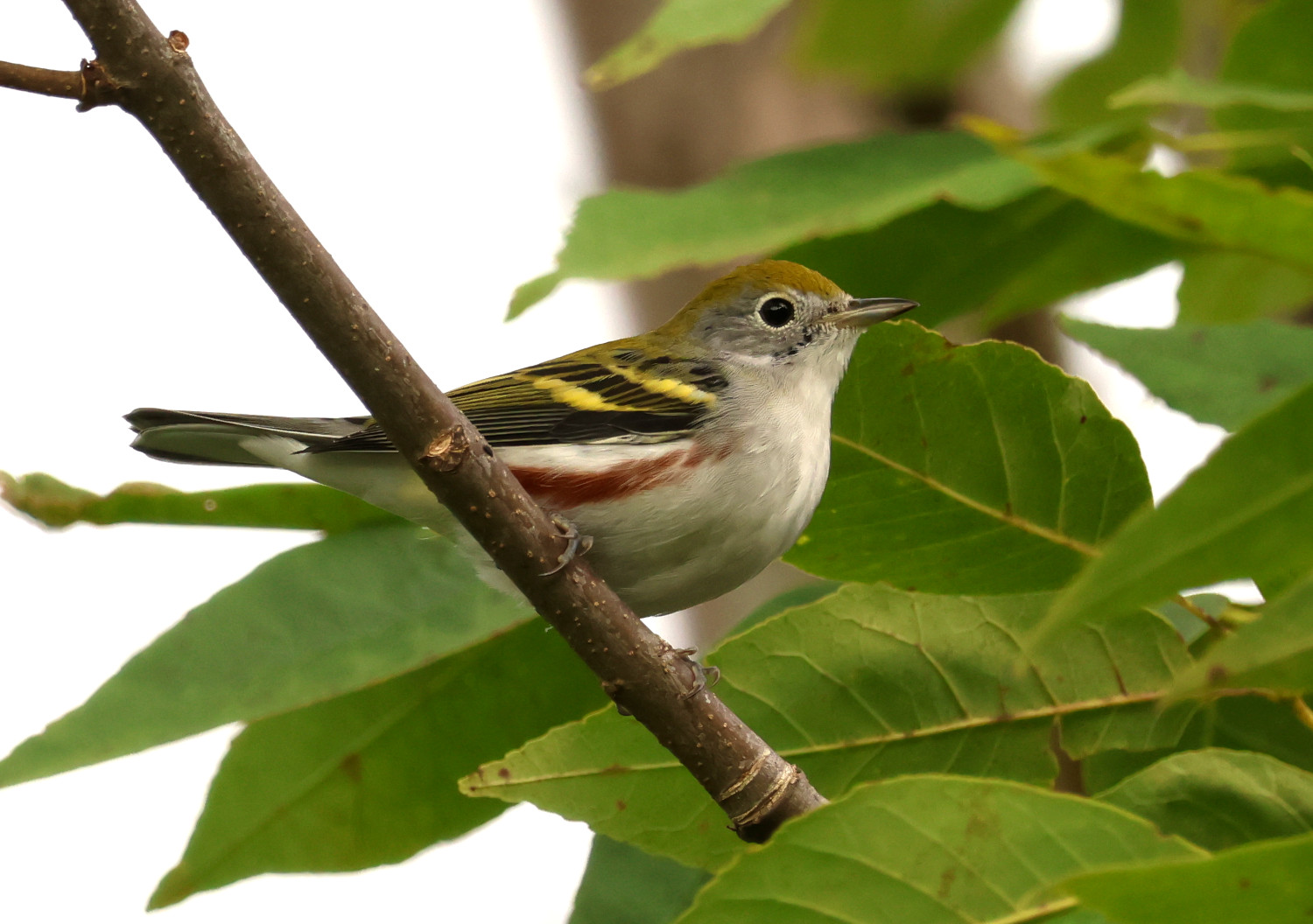
A Chestnut-sided Warbler in its muted -- but still beautiful -- late-summer costume on August 24:

A young White-tailed Deer starting to grow out of its spots, seen in the woods on August 29:


Another view of this same deer, as it tried to figure me out:


A sleepy bee underneath an aster bud in the late afternoon on September 1:


And a view on September 4 from beneath the Black Cherry trees covered with Virginia Creeper vines at the edge of our woods:

Finally, here are some assorted clips from the trail camera in the woods during July and August. This video features a young White-tailed Deer browsing along the trail, two Coyotes, a Ruffed Grouse (possibly a male, with those dark feathers on the sides of its neck), a deer sniffing the camera, and a family of American Crows taking a stroll down the path:

Summer is such an abundant time, and this year was full of fun and interesting sights, as always! Next up: sights from fall and early winter. :)

Saturday, December 31, 2022

The Rest of 2022, Part III: More Birds

We're continuing an account of sightings on our property in 2022. In addition to the birds who took up residence and raised families here this year -- which I wrote about in a previous post -- we had several other birds visiting our property. Here's a sampling!

This bright male Yellow-rumped Warbler stopped by the small pond in our woods on April 30, presumably on his way to northern breeding areas:


I enjoyed watching these American Goldfinches munching on Daisy Fleabane flowers near the house on July 7:


On August 18, an especially unusual bird showed up in the yard. I'd never seen a Blue-winged Warbler x Golden-winged Warbler hybrid before, but this bird's combination of yellow cap, black eyeline, pale throat and breast, and yellow wingbars were all the right marks; this particular hybrid is apparently common enough to have its own name -- Brewster's Warbler -- although it's not a distinct species. Here are a couple of very poor (but identifiable) pictures of this fancy bird:


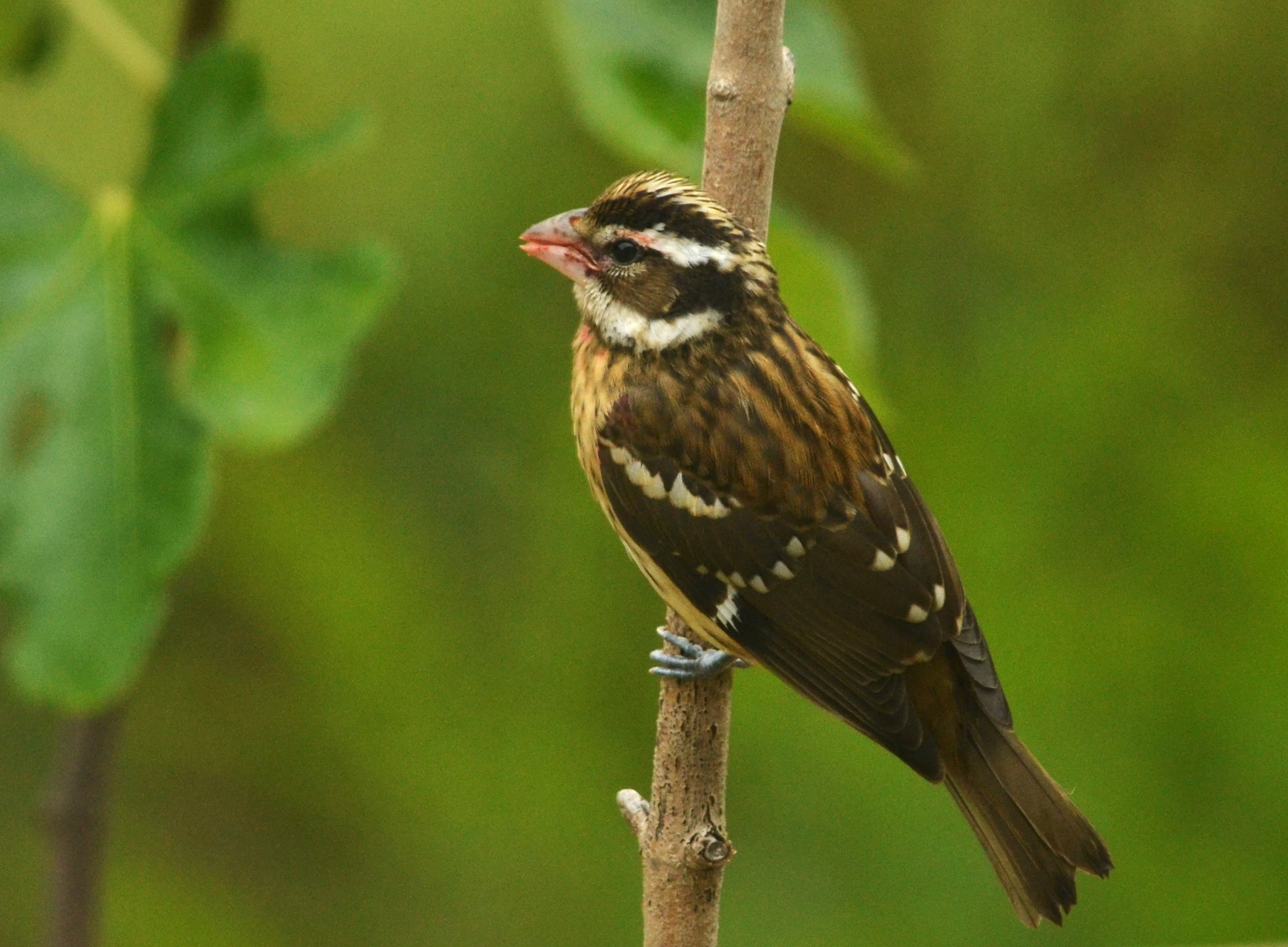
Also on August 18, some young Rose-breasted Grosbeaks perched on plant stakes on the deck:


Although this next picture is very blurry, I'm sharing it because I love seeing the fancy marks on these birds' wings, including surprising rosy patches:


This Chestnut-sided Warbler looked adorable under a Purple-flowering Raspberry leaf on September 3:


A bunch of young and/or female Ruby-throated Hummingbirds visited the potted zinnias on our deck in late August and early September. Here's one of these handsome birds perching on a stake on September 4:


I love that these flowers are big enough for the hummingbirds to put a little of their weight on the petals:


Here's another hummingbird practically perching on the petals as it drank on September 7:


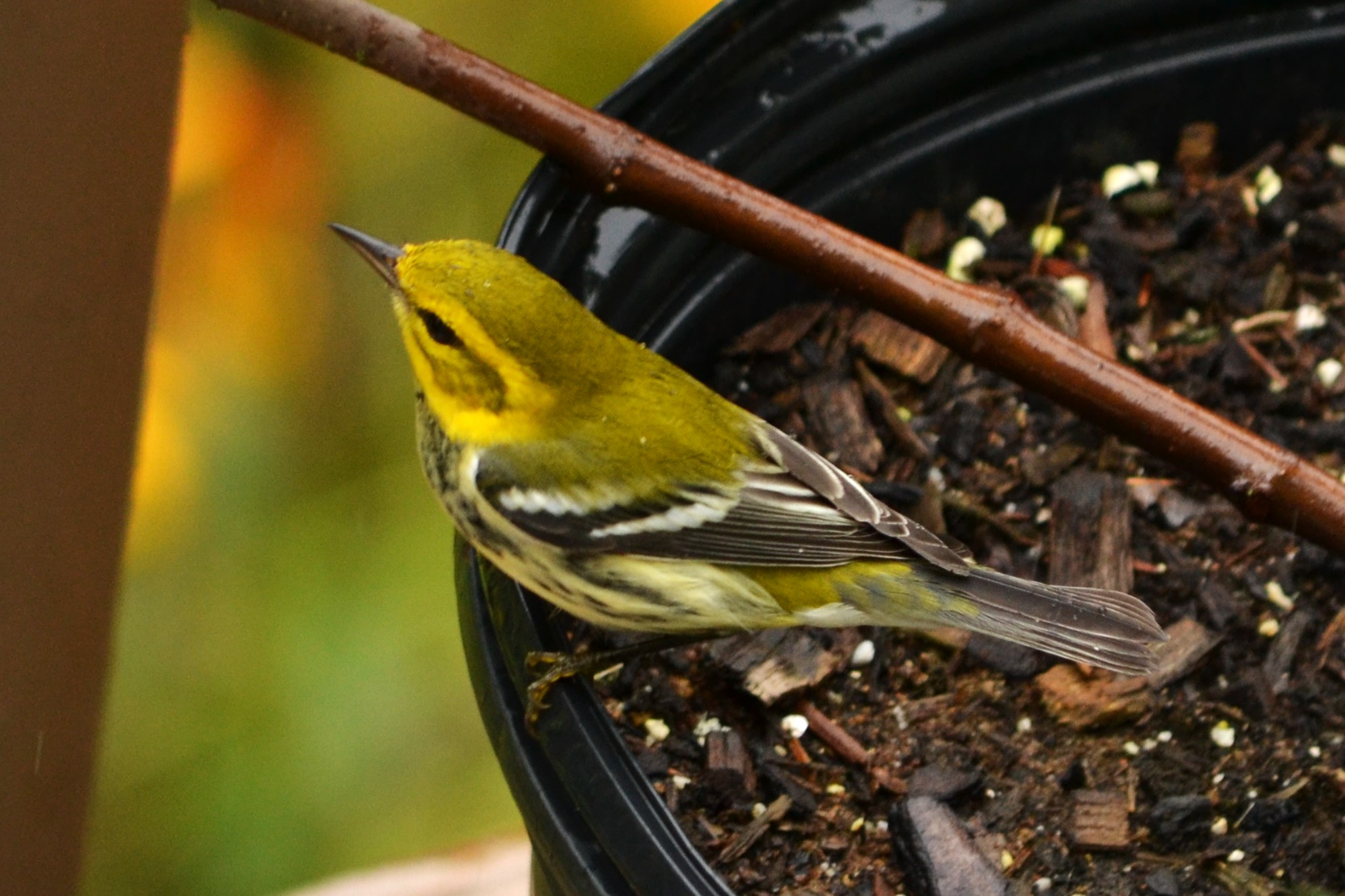
 This Black-throated Green Warbler stopped on our deck on September 11:


And I love seeing Gray Catbirds (perhaps one of our residents or else another bird passing through) with Pokeweed berries; this picture is also from September 11:


On September 18, I happened to be outside while a bunch of hawks were wheeling overhead, flying together in numbers and heading south. This one picture includes three Broad-winged Hawks and what I think is a Cooper's Hawk; there were at least a dozen more hawks in the air, and soon they all moved on:


Other bird highlights this year -- without pictures -- included two new bird species for the yard: #112 was a female Common Merganser who flew overhead on May 15; #113 was a Green Heron who perched in one of the trees next to the meadow on July 16. Also, thanks to help from the amazing Merlin app's Sound ID feature, I was able to learn that I frequently hear a Northern Waterthrush calling during the summer at the back edge of our woods, which means this species probably breeds somewhere near our property.

It's always exciting to see and learn new things! I have one more batch of sights to share from 2022 before this year is over. Up next: flowers and insects!

The Rest of 2022, Part I: Breeding Birds

Here we are, on the very last day of 2022 (happy almost-new-year!), and it's finally time to catch up with this year's sightings that have been gathering on my computer since March. I took fewer pictures than usual this year, mostly because my beloved camera -- which has seen a ton of use since I got it in 2011 -- simply hasn't been working very well anymore. A new camera is now waiting in the wings, ready to take over in 2023, and I'm super excited to make good use of this new toy. For this year, though, I've made do with my declining SLR camera and the less-than-ideal camera on my phone. Even so! There were a lot of really cool animals and plants on our property this year, and I'm happy to be able to share some highlights from 2022. We had a great deal of activity from our resident summer birds, so I'll start there!

Eastern Phoebes are some of my favorite yearly neighbors, and they were back and raising babies again this year. This was the first year since we moved into this house in 2017, though, that the phoebes didn't build a nest above our front door, and I very much missed having these wonderful birds so close by. (I wonder if the female who usually built the nest at that location is no longer alive....) Instead, the phoebes re-used a nest they built a couple of years ago in the rafters of an old shed on our property, and they raised two broods this year in that nest. Well, almost two broods. The first smooth-white Eastern Phoebe egg appeared in the nest on April 24, and on April 26 there was a speckled Brown-headed Cowbird egg in the nest, too. This is the second year I've seen one of our phoebe nests parasitized by cowbirds, and cowbirds need to live, too. I mean, really, it's pretty amazing that this is their method for raising young; that is, leave it to someone else. In any case, this situation didn't work out well for the phoebes this year. On May 12, the cowbird chick hatched while the phoebes were still in their eggs:


And on May 16, the cowbird chick was huge compared to the one phoebe chick that hatched:


As far as I could tell, the cowbird chick grew up successfully, and no phoebe chicks made it out of that brood. Pretty much immediately after the cowbird fledged, though, the phoebe parents got to work with a new batch of eggs in the same nest. By June 19, they had a nice second brood of phoebe babies:


All of that second brood fledged successfully, so that's a few new Eastern Phoebes in the world, at least!

Only one of our two nest boxes got used this year, first by a family of Tree Swallows -- I'm so happy to see these birds returning to nest in our meadow every year -- and then by a family of House Wrens after the Tree Swallows vacated the box and I cleared out their nest. Here's the lovely collection of Tree Swallow eggs in their feather-lined nest on May 14:

On May 10, I watched a Black-capped Chickadee gathering big beakfuls of moss in the woods and bringing them to a likely nesting spot in a hollowed-out tree right next to the path:


So much moss for such a little bird!


A hole in the chosen tree was fairly well overflowing with moss:


Here's the chickadee perched above the moss-filled hole on May 12 (and it looks like there's some fur in there, too):


I don't know whether the chickadees successfully raised a family in that nesting spot, but it was really cool to see part of the building process, at least.

The Northern Cardinals were super on top of the nesting process, and by May 15 they already had awkward fledglings inching out of their nest in the big fir tree in our back yard:


Wow, baby cardinals look weird! Both of the cardinal parents were on high alert in nearby trees while I was at all in the area. Here's the male cardinal keeping a close watch on me, and looking especially bright against this Shagbark Hickory's newly grown leaves:


On June 19, the cardinals' used nest fell out of its tree, so I got to see this neat construction up close:


Here's the underside of the nest, with wide bark strips from the non-native Beauty Bush (Linnaea amabilis) that grows nearby in the yard:

The same fir tree that hosted the Northern Cardinals in April and May turned out to be quite a popular nesting spot this year, with both Chipping Sparrows and House Finches raising families there later in the summer.

I happened across two Song Sparrow nests on the ground in the meadow this year. I'm not sure whether either of the specific nests I saw were successful, but I saw Song Sparrow fledglings hanging out with their parents in the summer, so something somewhere must have worked out. Here's one bunch of Song Sparrow eggs in their nest on May 25:

A pair of Dark-eyed Juncos had a nest on the narrow strip of sloping ground between our driveway and the road, and somehow they must have managed to protect their nest from the chipmunks and snakes that I often see around here, because on June 4 a couple of baby juncos were hopping around next to our driveway with the anxious parents in close attendance. Here's one of the new babies with its wacky hairdo and tiny stubby tail:


And here's one of the adult juncos foraging a few feet away:

Also near the driveway, the Gray Catbirds built a nest in a tangle of chokecherry shrubs and wild grape vines. The nest was well concealed, so my biggest clue that babies were nearby was the scolding parents. Here's one of the parent catbirds carrying a plump meal to its babies on June 22, and pausing at the top of our arbor (newly added above our front path this year) to yell at me:

This is the best angle I could find to get a glimpse at the catbird babies, and it's not exactly clear, but you can see the bright yellow beak and emerging feathers on one young bird at least; this picture is from June 23:


Those are all the nests I knew about for sure -- and 11 species with confirmed nests on our property is great! Some other birds also made it very clear that our yard was part of their territory, and I hoped that this meant they had families and nests somewhere nearby. The mid-sized apple tree behind our house ended up with a lot of bare branches this year, which made it a great spot to easily see birds. This male Common Yellowthroat sang his somewhat unusual song (with four parts instead of three) from this tree frequently during the summer; here he is on June 23:


I also got used to seeing a male Ruby-throated Hummingbird perched at the very tip of one of this tree's branches pretty much any time I looked at this tree this summer. I don't know for sure that this was always the same individual bird, but this seemed like such consistent behavior that I'm guessing it was a single male. I find it so strange and charming to see such a tiny bird perched so prominently. Here are a few pictures from June 22 and 23:


In this mid-stretch pose, he looks almost ferocious, but adorably so:

Another picture in somewhat better lighting:

I couldn't get enough of this bold little guy:


And here's one more picture of perhaps the same male hummingbird on June 20, because I also love seeing these tiny birds perched on comparatively huge power lines, another common sight in our yard this summer:


On July 17, a Blue-winged Warbler brought its fledglings to our yard while it hunted for caterpillars -- I'm not sure where this family had its nest, but I was glad to see them, since this was my first confirmation that this species breeds somewhere in our neighborhood:

I'm happy that I got to see so much activity from our summer resident birds this year, and I'm also sure that I missed a lot. Why can't I just be outside all the time? In any case, that was 2022's breeding bird highlights! I still have plenty of other sights to share from this year, so keep reading in the next post.