Showing posts with label coyote. Show all posts

Sunday, December 31, 2023

Mid July - Early September, 2023

2023 is almost over, so it's time to finish catching up with this year's sights from around our property! In the previous post, we got up to the middle of July. Let's take it from there! This post shares some highlights from the rest of summer in our yard, meadow, and woods; and then I'll finish up the year (fall and early winter) in another post.

Late in the afternoon on July 29, I heard some strange noises and saw flashes of a small long mammal darting between clumps of brush in our yard. The daylight was fading, but I grabbed my camera anyway, because I'd never seed a weasel-type creature in our yard before. (All previous sightings on our property have been courtesy of the trail camera in the woods.) Sneaking around the area, I must have accidentally ended up in the creature's intended path, because a Long-tailed Weasel came directly toward me, suddenly found a human blocking its way, and dropped the baby rabbit it was carrying at my feet. I guess we were both surprised! I backed away a bit, and the weasel came back and snatched up its meal again:

The weasel carried the rabbit to a spot behind our shed, and then it came back along the same route and repeated the process at least five more times (I lost count) while I watched from nearby. That's a lot of baby rabbits! I was wondering at the time whether the weasel could have been gathering food to feed its own young, but I've also read that weasels sometimes cache food -- more than they can eat at one time -- so maybe that's what was happening here. In any case, it was pretty amazing to see this confident and capable little hunter at work! All my picture attempts were blurry, but this gives an idea of the action at least:

While all this was happening, a Mourning Dove was watching from its nest in a tree right over the weasel's path:

Yikes, being a nesting bird sure seems perilous. Here's another picture of this Mourning Dove the next day, in better light -- this nest didn't ultimately succeed, and I don't know whether that was because of the weasel, or another predator, or some other hazard:

I had a lot of fun this summer trying to take pictures of Ruby-throated Hummingbirds as they visited the various hummingbird-friendly flowers in our yard. I don't keep hummingbird feeders, but it turns out that many of the (mostly native) flowering plants I've added to our property over the years (and some of the annual flowers I grow, too) are great feeding stations for these lovely little birds. It seemed like we had hummingbirds around pretty much all the time this summer, so there were lots of opportunities for pictures.

The big orange flowers on our Trumpet Creeper vine are always a big hit with the hummingbirds (and there are always many big black ants on these flowers, too) -- here's a hummingbird visiting these flowers on July 30:

I've noticed that hummingbirds visiting Trumpet Creeper flowers tend to leave with white foreheads, thanks to a generous dusting of pollen:

The Scarlet Runner Beans I grew in my vegetable garden this year were also popular with the hummingbirds, and I so loved having these birds come visit while I was in the garden. Here's the same bird from the above pictures again, now shifted to Scarlet Runner Bean flowers (also on July 30):


And here's a closer picture of another bird on August 13:

After visiting the bean flowers, this hummingbird perched for a bit on top of a post in the garden (I wonder what all that white stuff is along the top of its beak):

Look, a hummingbird tongue! Wow, what a cool little bird:


Ever since I planted Cardinal Flowers in our yard back in 2017, I've been hoping to get a good picture of a hummingbird visiting these flowers, and I finally managed it this year by peeking through our living room window and using our house as a blind on August 13:

Ah, I love these flowers, and it's so awesome to see them with their primary pollinator. And this was the first time I really got to see this flower's pollination mechanism at work! While the hummingbird drinks, the flower gives it a little pat on its head -- soooo cool:


The Coral Honeysuckle I planted in our yard last year bloomed for the first time this year, and the hummingbirds were very much into these flowers, too. Here's a bird visiting these flowers on September 4:

This bird was even able to perch on the honeysuckle's vine while feeding from these flowers:


What a sweet bird:


And here's one more picture from September 4, since this bird's feeding route also included the nearby New York Ironweed flowers:

There are always tons of flowers around here during the summer, and here's a small selection of some other blooming plants that caught my attention this year. Enchanter's Nightshade (Circaea canadensis) grows in our woods, and I love its dainty flowers and its whimsical name; this picture is from July 21:

Narrow-leaved Meadowsweet (Spiraea alba) -- also pictured here on July 21 -- produces its puffy sprays of white flowers at the back edge of our meadow:

Pokeweed grows abundantly in our yard and meadow, and birds enjoy its purple berries in the fall; I admired these Pokeweed blossoms on July 26, with white spheres opening to reveal green globular structures:


And a bee was also enjoying these pretty Obedient Plant flowers in our front yard on August 13:


And here are a few more assorted sights!

A juvenile (pink mouth) and adult (dark mouth) Blue Jay making a noisy scene in the yard on July 20:


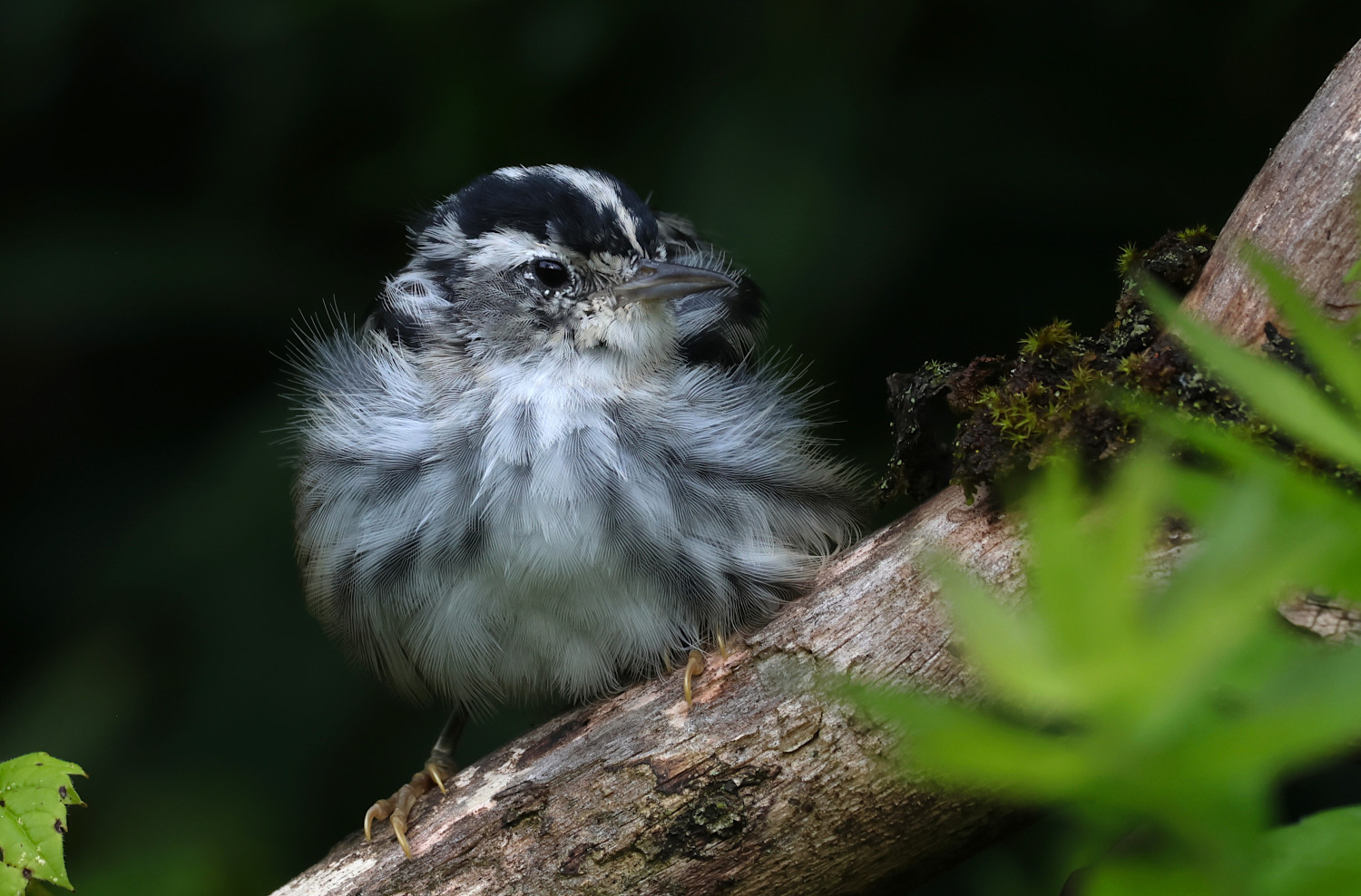
A very puffy Black-and-White Warbler that let me approach unusually close on July 21 -- I hope this bird was OK! It moved along soon after I took this picture:

A couple of Red Efts (juvenile Red-spotted Newts) ambling over the ground in the woods, this one on July 21:


And this one on August 13 (I have a hard time resisting an opportunity to hang out with these little creatures!):


Bunches of abundant Chokecherry (Prunus virginiana) berries on July 21:


A young American Bullfrog at the small pond in our woods on August 13:


A fantastically strange female American Pelecinid Wasp (Pelecinus polyturator) in our yard on August 23:


Here's another view of that same wasp:


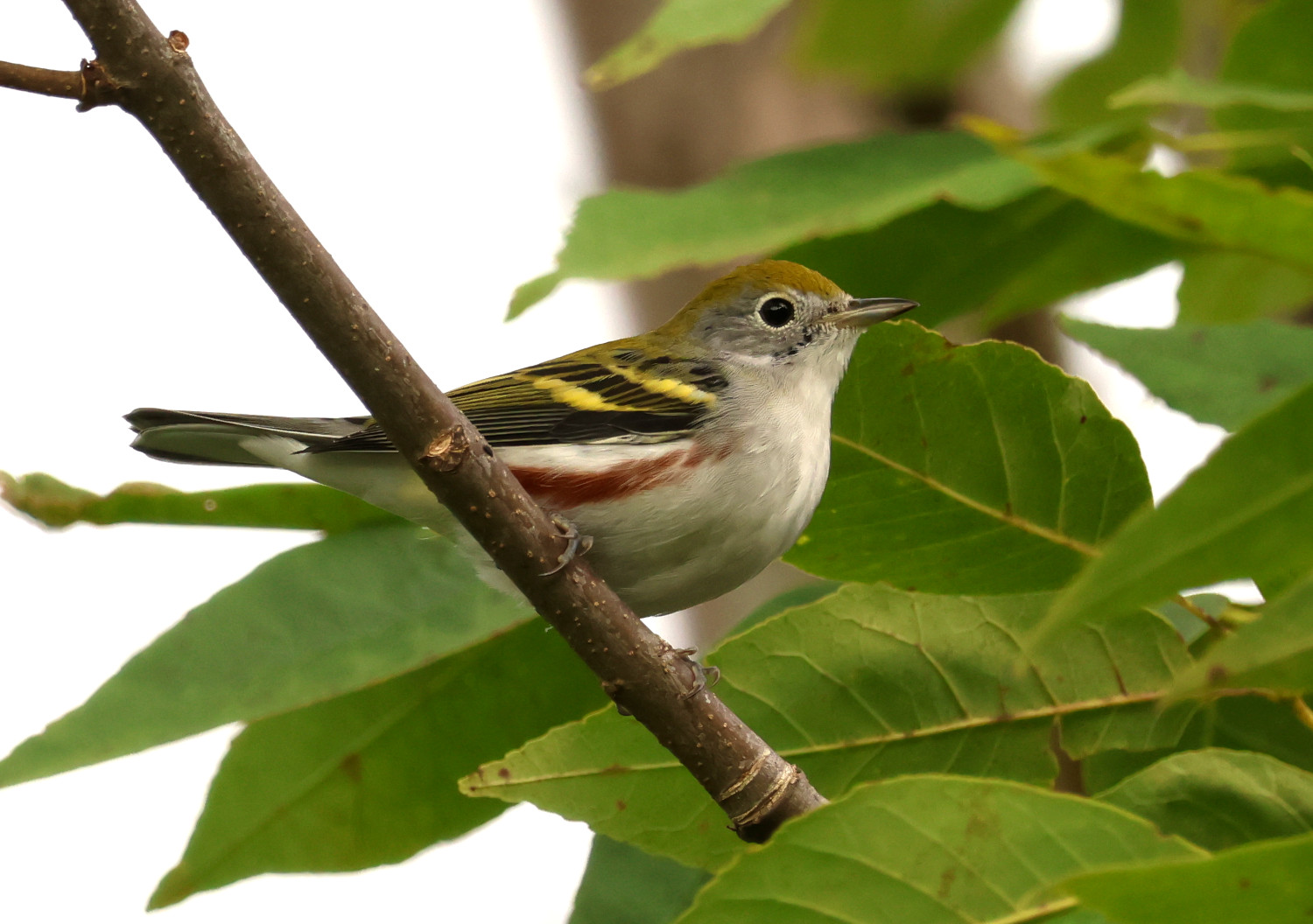
A Chestnut-sided Warbler in its muted -- but still beautiful -- late-summer costume on August 24:

A young White-tailed Deer starting to grow out of its spots, seen in the woods on August 29:


Another view of this same deer, as it tried to figure me out:


A sleepy bee underneath an aster bud in the late afternoon on September 1:


And a view on September 4 from beneath the Black Cherry trees covered with Virginia Creeper vines at the edge of our woods:

Finally, here are some assorted clips from the trail camera in the woods during July and August. This video features a young White-tailed Deer browsing along the trail, two Coyotes, a Ruffed Grouse (possibly a male, with those dark feathers on the sides of its neck), a deer sniffing the camera, and a family of American Crows taking a stroll down the path:

Summer is such an abundant time, and this year was full of fun and interesting sights, as always! Next up: sights from fall and early winter. :)

Monday, July 6, 2020

Spring and Early Summer Highlights: Part I

I'm starting to figure out that April, May, and June are some of the busiest months of the year around here! Between work (especially in April and early May), gardening (yay!), and other time-sensitive outdoors tasks (the Garlic Mustard battle continues...), this is the third year in a row when I've let nature sightings accumulate on my computer for most of these months, which means I end up making a big summarizing blog post after spring has finished. So here we go!

After three years living on this property, I'm getting a pretty good sense of what's normal around here in terms of wildlife. So instead of providing a comprehensive summary this year, I'll share some highlights of especially exciting or new-to-me sightings in our yard, meadow, and woods. There have been a lot of wonderful surprises in the past few months! (Even with just the highlights, this is going to have to be two posts!)

Mammals

The trail camera has continued to provide an amazing glimpse into the goings-on in our woods, including views of several mammals that we almost never (or actually never!) get to see otherwise. One of the coolest results from the trail camera this spring was the first confirmation that we do indeed have Bobcats in our woods! It's so exciting to see a wild feline up close (even remotely) as it traveled our trails, and the wild canines (Coyote and Gray Fox) that also made close-up appearances on the trail camera are super amazing, too. Sightings of a Virginia Opossum and a troupe of Raccoons were nice bonuses. :) Here are some cool mammal video clips, all from April and May:


Birds

Several birds have made their homes on our property this year, and there's been plenty of nesting drama. Our Eastern Phoebe pair is going for two broods again (same as last year), and they're doing a fantastic job so far. After starting a mossy/muddy foundation for a nest above our front door in April, the female Phoebe changed her mind and built a nest in the rafters of an old shed on our property instead. Here she is bringing nesting material to her construction site on April 24:
 

This shed is pretty run-down, and it's not really weather-proof, but I suppose it keeps enough of the rain away to protect a nest. We were worried about birds hitting the windows in this shed, so we hung up some branches and other random items to block the glass, and that seems to have worked. It was cool to see the phoebes swooping through this doorway, making themselves at home -- I'm glad someone's making good use of this old building!
 

The first Phoebe egg appeared on May 3, and by June 8 the five (or so) babies were looking alert and just about ready to leave the nest:
 

While the first brood was still in the shed, the female phoebe went ahead and built her second nest over our front door. Feeding and incubating two broods simultaneously must be a lot of work, and these two birds sure seem to make a great team! Here's one of the parents (probably the male) feeding two still-needy youngsters from their first brood on June 27 on top of a trellis in my garden:
 

And here are the new arrivals in the second nest on July 3 (that third egg hatched sometime after I took this picture):
 

Yay, phoebes!

A pair of Black-capped Chickadees claimed one of our nest boxes (which are theoretically for bluebirds) and built a lovely nest of moss, grass, and fur by the end of April. Here's one of the prospective chickadee parents peering out of the box on April 24:
 

But then in early May, a male House Wren arrived and pulled apart the chickadees' nest, emptying out the box for his own use. Sigh, poor chickadees. I saw chickadees working on nests in a couple of spots in tree limbs around the property later on, but I don't know if any of those other spots have been successful either. Being a cavity-nester seems like a really rough time! Here's a chickadee at one possible nest hole in the woods on May 10:
 

I wasn't especially happy about the male House Wren's arrival, even apart from his destruction of the chickadees' nest. House Wrens are native birds, and they're really cute and gregarious (plus, they're a species that I hadn't seen breeding on our property yet)... but I've also read that House Wrens are very aggressive, and they sometimes attack other birds' nests in their territory, even when they already have a nesting spot of their own. I was worried that the House Wren would hurt the Tree Swallows who were starting to nest in the other box right nearby. Here's the male House Wren depositing tiny sticks into the now-empty nest box on May 17 -- I love how these birds always approached the nest hole from above, swinging down over the rim of the roof:
 

For several days, I tried to deter the male House Wren -- or at least keep him busy -- by removing the twigs he kept bringing to the box. But he was very persistent, and soon a female House Wren joined him, and then an egg appeared in the box, and that was it, the box was definitely theirs. They ended up with eight little speckled eggs in their nest:
 

On June 19, those little eggs started producing tiny proto-birds:
 

And here's the whole fuzzy family at four days old, on June 22:
 

The adult House Wrens always kept a very close (and noisy) watch whenever I checked their nest box:
 

Close enough for a portrait, even:
 

Meanwhile, the Tree Swallow pair built their lovely feather-lined nest and raised their babies in the other box. Here's the male keeping watch while the female brings nesting material to the box on May 17:
 

I love having Tree Swallows as a consistent presence in the yard while they're nesting. Also on May 17, I was able to grab some pictures of these beautiful birds while they hunted for flying insects (and kept an eye on me) against blue skies over the meadow:


Everything seems to have turned out OK, and the House Wrens and Tree Swallows have all fledged successfully. I'm glad these two bird families were able to be amicable neighbors, and I'm happy that our nest boxes helped to add a dozen or so insect-eating birds into the world this spring. The Tree Swallows have now departed, but the male House Wren is still hanging around and singing, even though his nest is empty.... I wonder if there's still time for a second brood this year. (Going into next year, I'll need to decide whether I'm going to try to deter House Wrens from using our nest boxes again. There are a few other things I can try, so we'll see how it goes.)

This spring's nesting season has brought a couple of other complete surprises as well. Field Sparrows usually pass through our property every spring, but this year a pair of these little birds stuck around and raised a nest of babies somewhere under the vegetation in the meadow. I never saw the nest, but I saw the adults carrying food and acting agitated when I was nearby. I've read that Field Sparrows usually avoid nesting in areas near human habitation, so I feel super lucky that these two birds chose our little meadow for their family. Here's one of the adult Field Sparrows on May 16:
 

And, wonderfully, a pair of Great-crested Flycatchers decided to build a nest in a cavity in the old apple tree next to our driveway. Again, these are birds who have passed through our yard only occasionally in past years -- usually at treetop level -- so it was amazing to see them around nearly constantly, hunting in my garden, and so on. Here's the female flycatcher with a beakful of nesting material, ready to deposit it into the cavity on June 17:
 

And here's her mate keeping watch:
 

These seem to be tough birds. On June 27, I saw one of the flycatchers sitting on a power line in the rain, and a Mourning Dove landed practically on top of the flycatcher. There was a tussle, and the flycatcher came away with one of the dove's feathers:
 

Tough as they are, though, the flycatchers' nesting attempt didn't work. On July 1, I watched as a chipmunk emerged from the flycatchers' cavity and dropped an egg to the ground. Ugh. Nesting in cavities really seems to be a rough situation, and incredibly risky. Honestly, though, I'm surprised the flycatchers made it so far into their nesting attempt in the first place, since I see chipmunks and squirrels in that tree so frequently. The Great-crested Flycatchers left our yard after that. I hope they're able to find a new and better nesting cavity somewhere else. :/

There's more to share, but that's enough for one post! More coming soon.