Showing posts with label cooper's hawk. Show all posts

Friday, March 18, 2022

Moving Toward Spring

February is undoubtedly a winter month around here, but then March starts to bring the first hints of movement and growth, and now we're inching gradually toward spring. (It's coming!) I love getting to witness these scattered signs of the changing seasons. I have several sights to share from our home over the past month or so, and I'll start back in wintry February.

On February 21, I wandered into our woods in the afternoon sun and ended up admiring some little living things that I would probably overlook in other seasons. This fallen branch had quite a pretty collection of lichen (I'm guessing the bright yellow one is Common Sunburst Lichen, Xanthoria parietina):


And I noticed the delicate tracings of some species of liverwort (genus Frullania) on many tree trunks:

Here's a closer view of one of those liverworts; I wonder how long it took this tiny, tiny plant to grow to this size:


This moss looked especially green and fuzzy surrounded by melting snow:


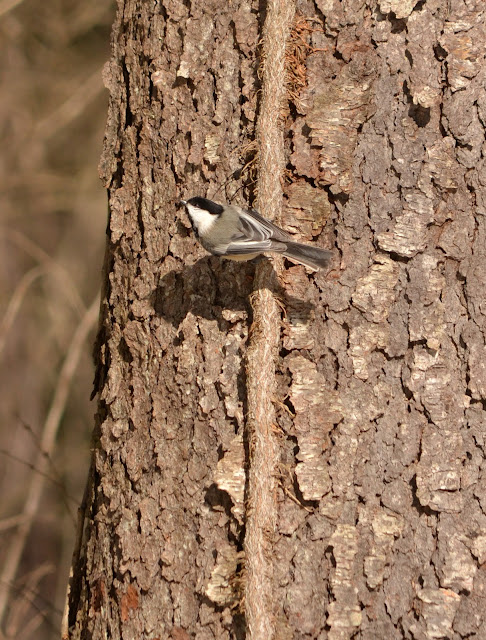
This Black-capped Chickadee was checking out tree trunks, too, and it perched for a bit on an old, thick Virginia Creeper vine:

On February 27, I stepped outside the front door to see an immature Bald Eagle wheeling over the house -- what a big bird!


I also admired the sight of our Tulip Tree still carrying many of last year's dried seeds against the clear blue sky:


On March 5, there were hundreds of Snow Geese and Canada Geese streaming northward overhead in big flocks. Yes! Let the spring migration begin! I am so happy that our property is apparently right under a regular flight route, because I love seeing -- and hearing -- these travelers each year in early March. These flocks made such interesting patterns in the sky:


Here's another big flock, this one with all Canada Geese:

And here's a closer view of one of the Snow Goose flocks (with a couple of Canada Geese mixed in):

Meanwhile, a male Northern Cardinal sang out from the top of a big spruce tree in our meadow:


We've actually had a cardinal (or maybe more than one) singing around here since December this winter, which seems very strange to me -- I'm used to hearing cardinals starting up in February. I suppose they're really interested in establishing this territory this year. Go for it, cardinal!


In early March, I learned that the Entomological Society of America has adopted "Spongy Moth" as the new common name for Lymantria dispar (formerly Gypsy Moth), and yep, we've got this moth's spongy egg masses all over the trees in our front yard, after this invasive moth's big population boom last year; here's hoping we'll see a decrease in their numbers this year:


On March 6, I got to see a couple more cool birds flying overhead on a sunny and clear day. This Cooper's Hawk crossed over our house a few times; I love those puffy white feathers at the base of its tail:


And it was wonderful to see a Turkey Vulture in the sky again after their absence during the winter:


A wet snowfall on the afternoon of March 9 made for a really pretty scene on the steeply sloped woods across the street from our house:


Here's a closer view into those woods:


Our first Song Sparrow of the year arrived in the midst of this snow, and it dug a hole at the base of the feeders and spent quite a bit of time feeding on dropped seeds there; I don't think I've seen a sparrow in a little snow burrow like this before:

What an industrious little bird. It flew from its hole to a nearby shrub a few times while I watched through a window, and I can't help thinking it looks super grumpy in this picture:


The next day, it was nice to see our newly-arrived Song Sparrow (the same bird?) in the sunlight:


This White-throated Sparrow also posed for bit in a tangle of wild grape vines:


In the woods, at least three recently awakened Eastern Chipmunks were scurrying around a snow-covered bank:


And perhaps because of the extra moisture from the melting snow, the various mosses and lichens on tree trunks in the woods were looking especially bright and verdant this day:
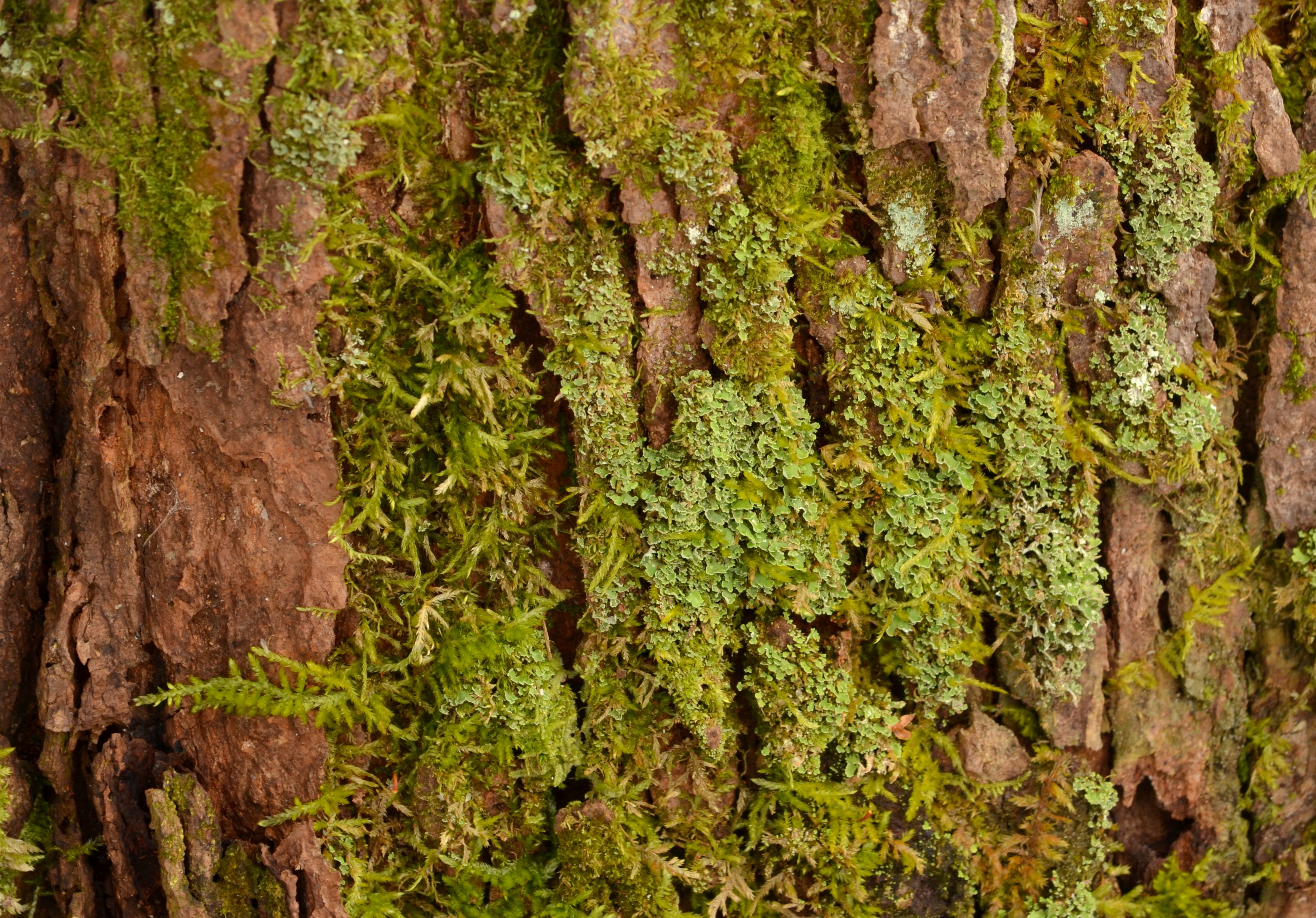

Here's another scene of tiny mosses and lichens among the crevasses of an old White Pine's bark:


Many of the trees had fuzzy socks made of moss:


And this moss almost seemed to be pouring out of this tree:


Back at the house, the persistent snow cover that's been around for months was receding, and our first Snowdrop buds were peeking through:


Then a storm brought another foot of snow, delaying things a bit.... But spring is certainly coming. Red-winged Blackbirds and Common Grackles are back in the area and singing, and as I write this, we're having a stretch of 60-degree and sunny days. Right now, I can see nearly equal parts bare ground and snow, I hear a Song Sparrow singing, and a pair of Eastern Bluebirds are checking out our nest boxes. The Snowdrops are uncovered again and I think they'll open today, our first flowers of the year. Here comes spring!

Friday, July 28, 2017

A Summer Summary: June and July at Our New Home

What a wonderful whirlwind…. We bought our new house and land (here in Central New York) on June 16, we moved in on June 31, and we’ve been doing all sorts of necessary work to set up the house the way we want it. The work is lengthy and poses all sorts of new challenges for us, but it’s so very rewarding to see things coming together. (We’ll be at this for some time yet. There are so many boxes left to unpack….) All throughout the setting-up/settling-in process, I’ve been getting to know the wildlife in the yard, meadow, and (only very briefly) woods that make up our property. In fact, I haven’t been on any walks in other places since moving in; there’s just been so much to see and explore right here.

I find that I have a lot of things to share. I meant for this to be a short summary with just a few highlights, but it’s turned into a rather lengthy report covering the past month and a half, the bulk of the summer in this one place. So feel free to skim, look at pictures, whatever you like. This is a record of the height of summer in the first year at our new home.

Mammals

We haven’t seen a wide variety of mammals here so far, but those we have seen tend to be frequent visitors or residents. White-tailed Deer love our meadow, and there’s usually one or more individuals out there in the early morning and late evening, and sometimes at other times of the day as well. Having deer around so much (and having them so easily watchable) has made for some interesting sights. A male deer hunkered down under our solar panels (!) during a rain storm one morning. I turned on the porch light late at night the other day to see two deer with their necks entwined and grooming each other; it was incredibly sweet. A doe yelled at me one afternoon when she -- presumably -- wandered up the meadow and got too close to me before realizing with a start that I was there. I’ve never heard a deer make that sound before, something like a breathy scream, and she kept at it while we both ran to opposite sides of the property (me uphill to try to see what was making that sound, she downhill to get away from me) and stared back at each other. I’ve heard the same sound again a few times since then, and Paul and I wonder if we have a particularly vocal (or perhaps anxious) neighborhood deer.

Groundhogs frequently feed in our yard, and these big rodents are fun to watch as they browse through the low vegetation and single out particular leaves. One groundhog I was watching seemed to have a taste for dandelion leaves, which suits me just fine.

Eastern Chipmunks and Eastern Cottontails are similarly common. There were four baby cottontails in the yard at one point, and there's at least one adult hanging around:


Today, I watched an Eastern Chipmunk climb up into an apple tree, grab a green apple in both of its hands (the apple was small for an apple but still large for a chipmunk) and gnaw it all over. Weird! And speaking of rodents, there’s a strange lack of squirrels here. I had one brief glimpse of a Red Squirrel as it ran down our driveway, but we haven't seen any other squirrels at all.

Birds

There are a fantastic number of birds here. I’ve seen/heard 41 species of birds in and around the property so far, which is pretty awesome for just June and July -- that’s a larger number for those months than we've had at any other house we’ve lived in.

I’ve loved getting to know our most common summer resident birds. The House Finches were the first to discover our window feeders -- the day after we put them up, no less! Gold Finches are almost always bouncing across the sky over the meadow; they’ve recently joined the House Finches at the feeders, and a couple of Purple Finches have even joined in, too. Only finches have shown up at the feeders so far… I guess there’s a lack of seed sources out there right now, and the Black-capped Chickadees and Tufted Titmice (our most frequent visitors at previous houses) are finding plenty of food in the trees.

Song Sparrows are a constant presence in the yard, and our residents have some pretty cool songs in their repertoire. One of the songs is remarkably similar to an Eastern Towhee song, but I’ve confirmed by sight that it’s actually the Song Sparrow singing, and I haven’t seen any towhees around yet. This sparrow sings: “Drink – your – tea-ea-ea-ea (mumble mumble mumble).” How strange!

Dainty Chipping Sparrows are another constant, and one of our resident Chipping Sparrows has a distinctive white brow-band in front of the usual brown cap:


I’ve seen this sparrow singing, so I assume he’s a male. I like having an individual bird around who I can recognize at sight. The above picture is from July 17. When I saw this bird today, his brown cap was looking pretty sparse; time to molt, I guess:


Gray Catbirds float across the yard and make frequent visits to the heavily laden raspberry patch. (It’s a huge raspberry patch, with way more berries than I and the birds together can eat.) American Robins are always snatching up worms and bugs from one part of the yard or another. Cedar Waxwings are also common. A male Ruby-throated Hummingbird frequently perches on one of our power lines. (This place could use some more flowers for hummingbirds; I’ll work on that.)

  
(Also, I just realized how many of my bird pictures in this post feature a power-line. These lines stretch across right at eye level outside our upstairs balcony, and I'm realizing now that they really are excellently situated for seeing birds up close. Not exactly a natural perch, but I'll take it.)

Tree Swallows were nesting in an old Purple Martin house in the center of the yard when we moved in, but the nest seems to have not been successful, because I never saw any juveniles, and the adults disappeared around the middle of July. The martin house is set up right next to a small ash tree (or more likely, the ash tree has grown up right next to the martin house), and I wonder whether the fact that the tree’s branches brush against the nest entrance might have been a factor in the nest’s failure; I imagine a predator would have pretty easy access to the house. I’m planning to take down the old house later this year (I’m somewhat wary about what I’ll find inside), and I’ll try to find a better location for a nest box next year. I loved having Tree Swallows around earlier in the summer, and I’m sad that they’re no longer here:


Before we bought the house, Eastern Phoebes started a nest right over the front door, and by the time the house became ours, there were phoebe babies in residence. I loved seeing bits of the babies sticking out of the nest, like this stubby tail in late June:


By June 30 (the day before we moved in), the nest was practically overflowing with big baby phoebes:


I was worried that all our necessary activity at the house would disturb the family -- and the parents were certainly not happy with us -- but these stalwart babies stayed put even during the actual move, when a stream of burly men with furniture had to pass right under their nest. Then a couple of days later, we opened the door and four babies erupted from the nest, flying strongly right up into the trees next to the house. The babies didn’t stick around (I miss them), but one or two adult phoebes still frequently hunt in our yard. Yay, phoebes!

Others of our summer birds I know are there because I frequently hear them calling around the house, even if I only see them once in a while. Mourning Doves, Common Yellowthroats, and Veeries have all been singing throughout the summer, although I’ve only seen them a few times each. Winter Wrens also frequently sing from the woods across the road, and it took me a while to place the song because I don’t think I’ve ever actually seen one of these birds singing. American Crows frequently call from somewhere in the neighborhood, and they sometimes make some very strange sounds. Blue Jays also often call from nearby, but I haven’t actually seen one in the yard yet.

We’ve only ventured into the woods on our property once so far since moving in (that should tell you how busy we’ve been), so I’ve only gotten a tantalizing glimpse at the birds living in our woods during the summer: an Ovenbird was singing, and a Northern Waterthrush foraged in the small, muddy pond tucked in under the trees.

A few other sightings have been brief and rare, but they still suggest that some really cool birds are living (and hopefully breeding) in the area. A couple of beautiful Black-and-White Warblers have shown up a few times to work over our old apple trees. Male Scarlet Tanagers have passed through our yard. (This summer has given me the closest looks I’ve ever had of both Black-and-White Warblers and Scarlet Tanagers… and I didn’t have my camera with me either time. Sigh.) Wild Turkeys walked through the meadow the other day. Broad-winged Hawks and Red-tailed Hawks have occasionally circled overhead. A male Magnolia Warbler stopped by this morning.

Three juvenile Cooper’s Hawks have been hanging around since last week. They show up every couple of days, and they mostly sit in a dead tree at the corner of the meadow, just generally upsetting all the resident songbirds. Here are two of the three hawks, one above (it posed beautifully like that for a minute or so) and one below:


At one point, I watched one of the young hawks swoop down to the fence in our yard and look around at all the smaller birds yelling at it, like, “Why aren’t you letting me eat you?” Another time, a Gray Catbird was perched in the dead tree with the hawks and yelling at them, and one of the hawks hop-fluttered over to it, but of course the catbird was gone by the time the hawk’s talons landed on the branch. It seems like these young hawks have a lot of practice ahead of them before they get to be fully-grown fearsome hunters. 

Today’s havoc-wreakers were several young Rose-breasted Grosbeaks (I counted at least four) who were barreling through the yard all morning, grabbing food from tree leaves and grooming themselves, but also chasing House Finches, Cedar Waxwings, and Eastern Phoebes. I assume most of these birds were juveniles, but there might have been an adult female in there as well. This grosbeak had a hint of rosy blush on its breast:


And a rosy wash under its wings:


And I don't think I'm imagining a hint of red on the front edge of this grosbeak's wing:


Even in brown costumes, Rose-breasted Grosbeaks are very handsome birds.

So, 41 birds so far this summer. And with all these birds, you know what I haven’t seen? House Sparrows and European Starlings. Not a single one (yet).

Reptiles and Amphibians

In terms of variety, we’re pretty slim on the herpetological front so far. The only species of reptile we’ve seen is the Garter Snake, but these snakes seem to have a solid presence around the house, basking on rocks and generally hanging around. We even saw one snake on a high ledge inside the basement at one point. The basement snake was opening and closing its mouth, and a suspicious bulge was moving down its body; perhaps that was the remnant of a small rodent that now won’t be in our house. I’m happy to have snakes around and patrolling!

For amphibians, a hefty American Toad showed up next to the house one day, and a couple of tiny individuals have passed through the yard. I’ve heard Green Frogs and what I now know are Gray Treefrogs calling from somewhere not too far away at night. (At first I thought the short trills I was hearing were toads, but comparisons to online recordings pointed much more clearly to Gray Treefrogs. I’ve never seen one of these frogs before, and I’d love to meet one someday.) A large Red Eft (juvenile Red-spotted Newt) was lounging under some thick vegetation yesterday:


But really, as it turns out, this is the land of Spring Peepers. I saw one adult peeper in late June, and that was very exciting. But then in early July, tiny just-metamorphosed peepers started showing up in the yard, and they’ve been here in significant numbers all month. It’s made mowing the lawn quite a long task, because I have to keep stopping to move peepers out of the way. And to be clear, these are some really tiny peepers!


In the past few days, I’ve started noticing tiny peepers on the windows at night, hunting the miniscule bugs attracted to the indoor lights. Here are two peepers, and the one on the right has just leapt after a bug (look, a peeper tongue!):


I'm really impressed at these little frogs' climbing skills, and I find the smudge marks this one's left on the window incredibly charming:


Last night was something of a peak, with six tiny peepers climbing on the front door's window at once. Can you find all six frogs in this picture?


What a magical fairy-tale land this is, where tiny frogs are some of the most common animals around. I wonder if this is normal for this place, or if there’s been a particular boom in the peeper population in this relatively wet summer. I don’t know, but I’ll take it!

Insects and Others

Oh, there are so many bugs around here that I haven’t tried at all to identify them all. Strange and interesting creatures keep crossing my path, though, so here’s a sampling. 

We came across an absolutely gorgeous Virgin Tiger Moth (Grammia virgo) while walking through the meadow in mid-July:

 
This big orange weevil is a Rhubarb Weevil (Lixus concavus), and what a coincidence, there was rhubarb near the spot where I found it. (But apparently although it lays eggs in rhubarb stems, it doesn’t actually damage the plant because quick-growing rhubarb crushes the eggs; this weevil more commonly reproduces by using docks and other plants as hosts.)


Here’s a really convincing (and big) wasp-mimic beetle, a Sugar Maple Borer (Glycobius speciosus), with my thumb for scale; this beetle was on our driveway in early July:


Among the butterflies, Tiger Swallowtails are fairly common, as are what I suspect are Pearl Crescents, and at least one species of fritillary. Monarchs are rare, but they are around:


Plants

As with the insects, I’ve been taking a haphazard approach to identifying the plants growing on our property; it’ll take a very long while before I have a solid grasp of most of what’s here. Many of the most common flowering plants I’ve identified are non-native (and many are invasive). I pulled and bagged as much Garlic Mustard as I could find early on, but there’s still abundant Greater Celandine (Chelidonium majus), Motherwort (Leonurus cardiaca), and Hemp-nettle (Galeopsis species). The bees, at least, seem to love all those flowers, so I don’t feel too bad about their presence for now. And as I push back against these plants in future years I’ll be sure to replace them with as much native flora as I can.

I was happy to find my first orchid on the property, which turns out to be yet another non-native (and sometimes even weedy) plant, Helleborine (Epipactis helleborine). But the idea of a weedy orchid is itself so amazing to me, and I’ve only found a few of these plants on the property so far, that I’m happy to have them stay here:


Again, finding and identifying the native plants on the property will take quite some time, but I’ve found a few prominent populations of native plants so far. Pokeweed (Phytolacca americana) is common and weedy, but I quite like these imposing plants. And bank full of Spotted Jewelweed (Impatiens capensis) and what I’m pretty sure is Thin-leaved Sunflower (Helianthus decapetalus), all just now coming into bloom (and freed from heavily invading Garlic Mustard last month) is a lovely and welcome find:


*** 

I’ve learned so much about this place in the past month and a half. And this is only the summer, and only the first summer of what will hopefully be many years of caring for this property to come. Who knows what challenges and changes and discoveries are still to come!

Friday, August 15, 2014

Blue Sky Birds

The past couple of days have been cool and sunny, perfect weather for hanging around in the yard and watching various birds cruise by overhead. I'm having great fun figuring out who regularly uses these airways. Turkey Vultures make dark slouching shapes as they soar by:
 

These birds are so big and imposing, and their silhouettes look so cool against the clouds:
 

Here's another big dark bird, but it's not a vulture.... Yes, Bald Eagles are apparently fairly common here (so awesome), and I've seen immature birds like this one over our yard a couple of times already:
 

This morning, a young Cooper's Hawk swept into the yard, scattering the smaller birds. It didn't manage to catch a meal, and the Barn Swallows promptly chased it away again:
 

Barn Swallows are pretty much always swooping around over the yard, which makes me really happy. Swallows and swifts are definitely becoming some of my favorite birds; these guys are just so much fun to watch as they zip and swerve all over, and Barn Swallows especially are super fancy in flight:
 

Hooray for beautiful days and aerial activity!