After my walk with my family through the Barataria Preserve, I didn't expect to see much more in the way of wildlife on our stay in New Orleans. As it turns out, I was completely wrong! While visiting various parts of the city, we passed by rivers, lakes, and parks, all of which were teaming with life, and I got to hang out with some awesome southern birds. It's a good thing I decided to carry my camera with me everywhere!
Our hotel was only a few blocks from the Mississippi River, and while we were exploring the Riverwalk one morning, we came across two Brown Pelicans, one in the water and one on the pier:
This was my first time really looking closely at these strange creatures, and there are so many things I found to love about them -- that cool white mohawk; the scary hook at the tips of their beaks:
That oversized beak looks like it should be unwieldy, but the pelicans were not at all clumsy in preening themselves:
And look, the pelican's back is also a pillow:
The Brown Pelicans may look a little awkward on land, but they seem much more balanced on the water:
And they showed their full size and power when they took flight:
Now those are some awesome birds.
In the center of the city, away from the water, House Sparrows (unsurprisingly) were everywhere, and they were remarkably tame. I got very close to a few House Sparrows drinking and bathing in a fountain in the French Quarter:
I'm not a huge fan of House Sparrows in general, but you have to admit, these fellows are pretty darn cute:
We spent some time walking through the grounds of City Park, and there were birds everywhere. One pond near the art museum, in particular, was teeming with waterfowl, and the fact that two guys were standing there throwing whole loaves of bread into the water meant that we got to see some cool birds very close up. There were some bizarre domesticated birds, like this Muscovy Duck:
Dozens of wild birds also decided to make this pond their home, including a flock of pretty White Ibises:
And jostling for position with the gulls and ibises was a single Anghinga (if I moved any more to the right when taking this picture, I would've fallen into the water):
I think this is a simply gorgeous bird, although I do feel like its elegance is a little offset by the total goofiness of its feet:
This adorable little Pied-billed Grebe wasn't partaking in the free bread, as far as I could tell, but it also didn't swim too quickly away from us as it dove in and out of the water:
In other parts of City Park, away from the magically bread-filled pond, the birds were still abundant, but less willing to stay close to us. We watched this American Kestrel swoop from its perch high in the trees to go hunting in the field below:
And a Loggerhead Shrike perched on a wire above our heads before flying off again after its next meal:
On the last day of our visit, we drove to Lake Pontchartrain, where I snuck up close to a group of Cattle Egrets feeding on a grassy bank next to the parking lot:
These birds didn't seem to mind my presence, and I had a lot of fun taking their pictures.
Pretty birds!
So it was a pretty excellent trip. Some of these birds are ones that just don't live near my home up north, and I got to meet a bunch of cool creatures that I'd never seen before.
I have one last thing to share from the trip, although it's not technically alive. In one of the city's art galleries that we randomly wandered into, we found some wooden carvings of birds that were just phenomenal. The artist's name is Mike Bonner, and I own no rights to this work:
I still cannot believe that this is wood! That Northern Pintail looks like it's about to swim right off the shelf. And this picture doesn't at all do justice to the incredible amount of detail in every single carved feather:
It just goes to show, even in the city, and even inside buildings, you never know when you'll find beauty and nature.
I spent the final days of 2011 with my family visiting New Orleans, a part of the country I'd never been to before. Over the course of three days, we ate excellent food, heard great music, and saw awesome wildlife -- as far as vacations go, it was pretty darn successful!
On the first day of our visit, we went across the Mississippi River and outside the city, to the cypress swamps of the Barataria Preserve, part of the Jean Lafitte National Historical Park. We walked across boardwalks and through the trees, thoroughly enjoying the mid-60s temperatures and sunny skies.
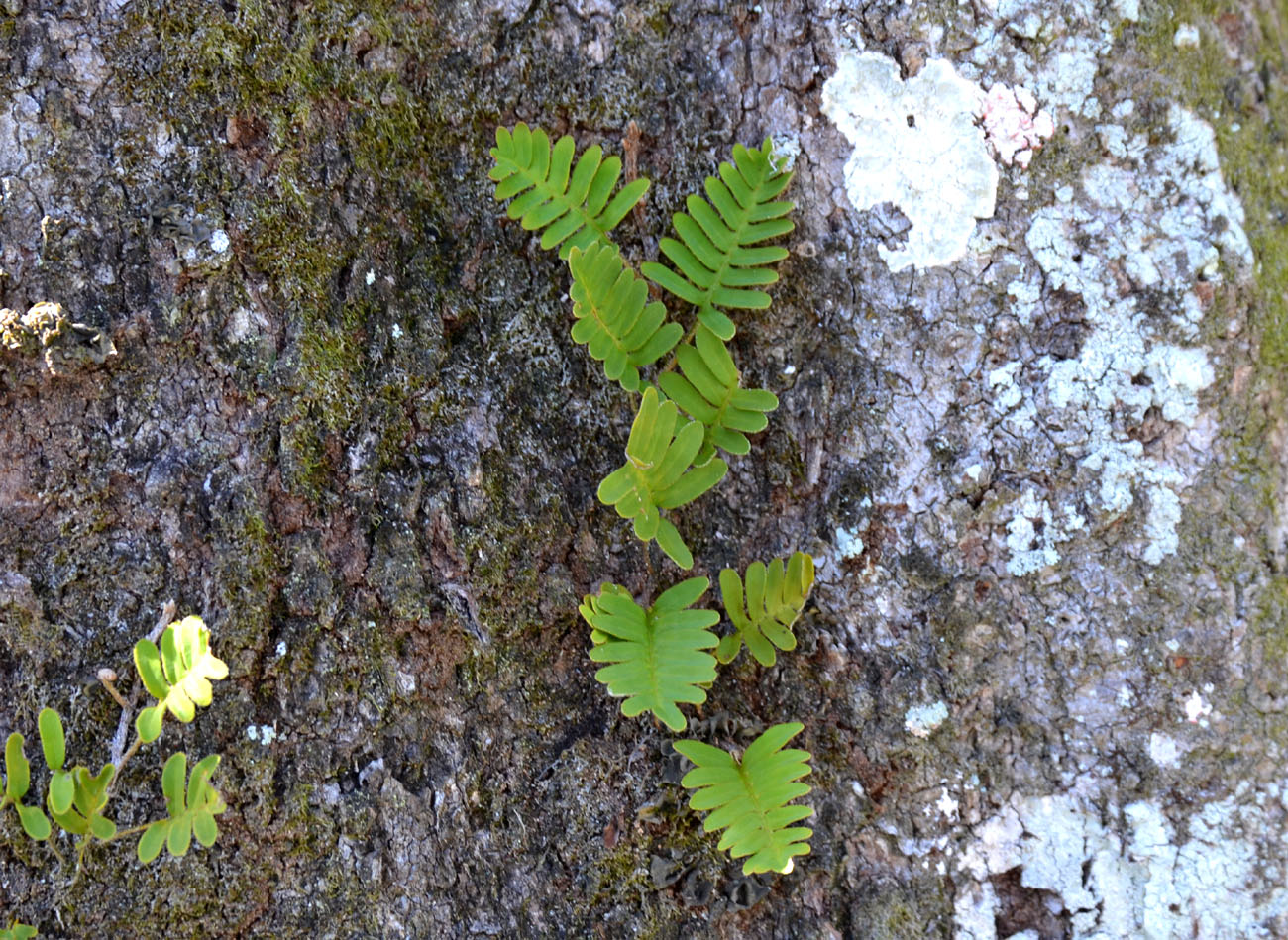
Most of the trees had shed their leaves for the winter, but that's about the extent of this place's similarities with my familiar Connecticut woods. The moist air is a haven for epiphytes, with thick curtains of Spanish Moss everywhere, and cute little ferns growing right on the tree trunks:
The understory of the forest was full of Dwarf Palmetto palms -- you don't see these in Connecticut!
And the cypress trees were so crazy looking, with their knobbly "knees" sticking up all across the ground:
There were reptiles everywhere -- no need to hide or hibernate with these temperatures, I guess! I tried and failed to find alligators (too bad), but there were plenty of other scaly creatures out and about. We came across two snakes right next to the path, fortunately not poisonous ones (we were actually warned not to stick our hands below the boardwalk in case one of Louisiana's many poisonous snakes lurked there). This first snake, as far as I can tell, is a Banded Water Snake (Nerodia fasciata), not unlike the water snakes of the north:
And this Western Ribbon Snake (Thamnophis proximus) is a close relative of our Eastern Garter Snake:
A Red-eared Slider -- native to the south but familiar from pet stores and northern ponds where it has been introduced -- waved at us from its basking spot in the canal:
The reptiles we saw most frequently, though, are true exotics from my northern perspective. I had a Green Anole as a pet when I was younger, but it was a treat to see these fancy little lizards in the wild:
I love the colors on this green-hued fellow, especially around its eyes:
And the anoles in their brown colors were quite pretty as well:
Reptiles (and birds) were by far the most frequent animals we encountered, but we saw a few other denizens of the swamp as well. This tiny Cricket Frog (Acris sp.) was perched happily on some water plants below the boardwalk:
I'd never seen such strangely hairy plants before, so I looked them up. They turned out to be something called Salvinia, a dangerously invasive type of water fern! I had no idea such a thing existed, and these little leaves are so cool looking -- it's a shame they're causing such problems in the places where they've been introduced.
This Raccoon looks like it may have found the coziest spot in the forest, high off the ground and directly in the sun:
And this Red Admiral butterfly was so intent on probing the leaking tree sap on this tree that it didn't mind me sneaking up close to take its picture. It's hiding the brilliant orange/red inside its wings, but I think the patterns on the outside of its wings might be even more beautiful:
We saw so many interesting things, and this was only the first day of our trip to New Orleans! I kept my camera with me as we wandered through different parts of the city in the following days, and I ended up seeing some pretty cool birds. So you can look forward to a "Part 2" of our Louisiana adventure, coming soon!
This past Friday (the 23rd), while visiting with family in New Jersey for the holidays, Paul's dad and I took a trip out to the Edwin B. Forsythe National Wildlife Refuge on the Jersey shore. This place is a haven for wintering shorebirds, including some very cool visitors from the far north (more on that later), and the trip was fantastic. We saw so many awesome things, and it was hard sometimes just to keep moving forward with all the activity around us. We saw at least 34 species of bird, including six I'd never seen before. I wasn't able to get pictures of everything, but here are some highlights from the trip! One of the main features of the refuge is an 8-mile drive through fresh- and saltwater marshes to get up close to the creatures hanging out there. But before we started on the drive, we got out of the car and poked around the shrubs and trees by the visitor's center for a little while. There were tons of small birds hanging out there, and we couldn't believe how unceasingly active they were! Along with the usual titmice, chickadees, etc., there was a particularly handsom Red-bellied Woodpecker, with more red on his face than I think I've seen before:
He even showed off his reddish-tinged belly, something I don't often get to see on these birds:
A beautiful female Eastern Towhee was scuffling in the dry leaves:
And we even saw an unusual visitor:
This Pine Warbler is supposed to be much farther south at this time of year, and it actually got flagged as "rare" and required confirmation when I reported it on eBird. (This is the first time something like that has happened to me.) It was a very active bird, and it didn't seem to care that it was a well out of its normal range.
Once we finally tore ourselves away from the songbirds and drove on into the wetlands, we were surrounded by waterfowl -- thousands of ducks and geese on every side. The Snow Geese, especially, come to this refuge in the winter in huge numbers, although these snow-white birds with black-tipped wings prefered to stay some distance away from us during this trip:
These birds spend their summers in the high arctic and their winters down here -- I'm always amazed when I think of creatures traveling so far to find suitable seasonal habitats. When our Snow Geese moved, their expansive flocks made quite an impressive sight streaming across the sky:
Some of the smaller waterfowl we saw were really cool as well. This adorable little bird is an American Coot -- it kept wiggling its tail as it paddled along:
I love the warm cinnamon patterns on these female Northern Pintails -- somehow I managed to not take any pictures of the male pintails, whose striking brown and white coloring and pointy black tails make them look like they might belong to a different species from the females:
And these Northern Shovelers look almost alien, with those monstrously oversized bills:
My favorite of the waterfowl, though, was one that we came across toward the end of the drive. A flock of about a dozen Tundra Swans, huge and white with black beaks and legs, were hanging out in the marsh with a bunch of Canada Geese and Green-winged Teal. Like the Snow Geese, the Tundra Swans spend their summers right at the very top of the continent, and it feels special to get to see them here all the way down here (even if this is their normal wintering ground). We watched a few of the Tundra Swans circle above the larger group:
And then come in for a landing:
The swans were very active, calling constantly to each other in a wonderfully musical honking/cooing sound. Here's a quick video I took -- you might need to turn the volume up a little to hear the calls clearly:
So the waterfowl was awesome, but that's not all we saw! There was a Peregrine Falcon feeding on top of a nesting platform:
And in possibly the best part of the trip, we watched two adult Bald Eagles taking part in what looked like a bonding ritual -- one eagle would bend down to the ground and then straighten up and touch beaks with the other eagle, perhaps passing it a tasty morsel:
While we watched, the eagles both startled and hopped up into the air at exactly the same time:
The two birds immediately settled back down again and continued their earlier activity. Whatever alarmed them must not have been any real threat.
The trip ended with an as-yet-unsolved mystery -- a rather large mammal swimming past us:
Its head doesn't look quite right for a mink, and I can't tell whether it might be a large rodent of some sort (a Nutria perhaps?). I'm open to suggestions if anyone has any ideas!
There were so many amazing things to see on this trip -- the reserve is well worth a visit.