Showing posts with label turkey vulture. Show all posts

Friday, March 18, 2022

Moving Toward Spring

February is undoubtedly a winter month around here, but then March starts to bring the first hints of movement and growth, and now we're inching gradually toward spring. (It's coming!) I love getting to witness these scattered signs of the changing seasons. I have several sights to share from our home over the past month or so, and I'll start back in wintry February.

On February 21, I wandered into our woods in the afternoon sun and ended up admiring some little living things that I would probably overlook in other seasons. This fallen branch had quite a pretty collection of lichen (I'm guessing the bright yellow one is Common Sunburst Lichen, Xanthoria parietina):


And I noticed the delicate tracings of some species of liverwort (genus Frullania) on many tree trunks:

Here's a closer view of one of those liverworts; I wonder how long it took this tiny, tiny plant to grow to this size:


This moss looked especially green and fuzzy surrounded by melting snow:


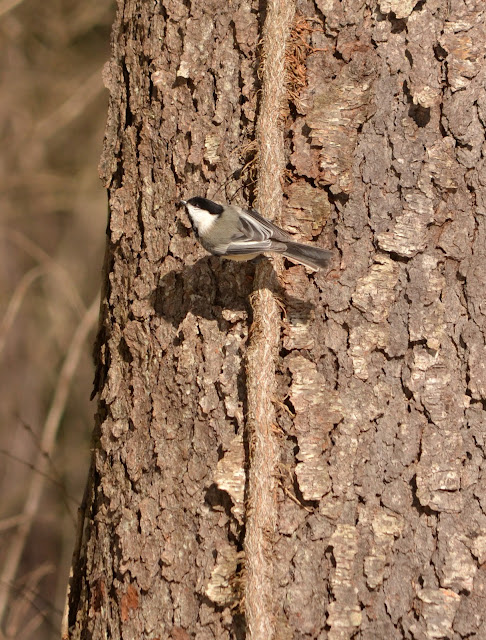
This Black-capped Chickadee was checking out tree trunks, too, and it perched for a bit on an old, thick Virginia Creeper vine:

On February 27, I stepped outside the front door to see an immature Bald Eagle wheeling over the house -- what a big bird!


I also admired the sight of our Tulip Tree still carrying many of last year's dried seeds against the clear blue sky:


On March 5, there were hundreds of Snow Geese and Canada Geese streaming northward overhead in big flocks. Yes! Let the spring migration begin! I am so happy that our property is apparently right under a regular flight route, because I love seeing -- and hearing -- these travelers each year in early March. These flocks made such interesting patterns in the sky:


Here's another big flock, this one with all Canada Geese:

And here's a closer view of one of the Snow Goose flocks (with a couple of Canada Geese mixed in):

Meanwhile, a male Northern Cardinal sang out from the top of a big spruce tree in our meadow:


We've actually had a cardinal (or maybe more than one) singing around here since December this winter, which seems very strange to me -- I'm used to hearing cardinals starting up in February. I suppose they're really interested in establishing this territory this year. Go for it, cardinal!


In early March, I learned that the Entomological Society of America has adopted "Spongy Moth" as the new common name for Lymantria dispar (formerly Gypsy Moth), and yep, we've got this moth's spongy egg masses all over the trees in our front yard, after this invasive moth's big population boom last year; here's hoping we'll see a decrease in their numbers this year:


On March 6, I got to see a couple more cool birds flying overhead on a sunny and clear day. This Cooper's Hawk crossed over our house a few times; I love those puffy white feathers at the base of its tail:


And it was wonderful to see a Turkey Vulture in the sky again after their absence during the winter:


A wet snowfall on the afternoon of March 9 made for a really pretty scene on the steeply sloped woods across the street from our house:


Here's a closer view into those woods:


Our first Song Sparrow of the year arrived in the midst of this snow, and it dug a hole at the base of the feeders and spent quite a bit of time feeding on dropped seeds there; I don't think I've seen a sparrow in a little snow burrow like this before:

What an industrious little bird. It flew from its hole to a nearby shrub a few times while I watched through a window, and I can't help thinking it looks super grumpy in this picture:


The next day, it was nice to see our newly-arrived Song Sparrow (the same bird?) in the sunlight:


This White-throated Sparrow also posed for bit in a tangle of wild grape vines:


In the woods, at least three recently awakened Eastern Chipmunks were scurrying around a snow-covered bank:


And perhaps because of the extra moisture from the melting snow, the various mosses and lichens on tree trunks in the woods were looking especially bright and verdant this day:
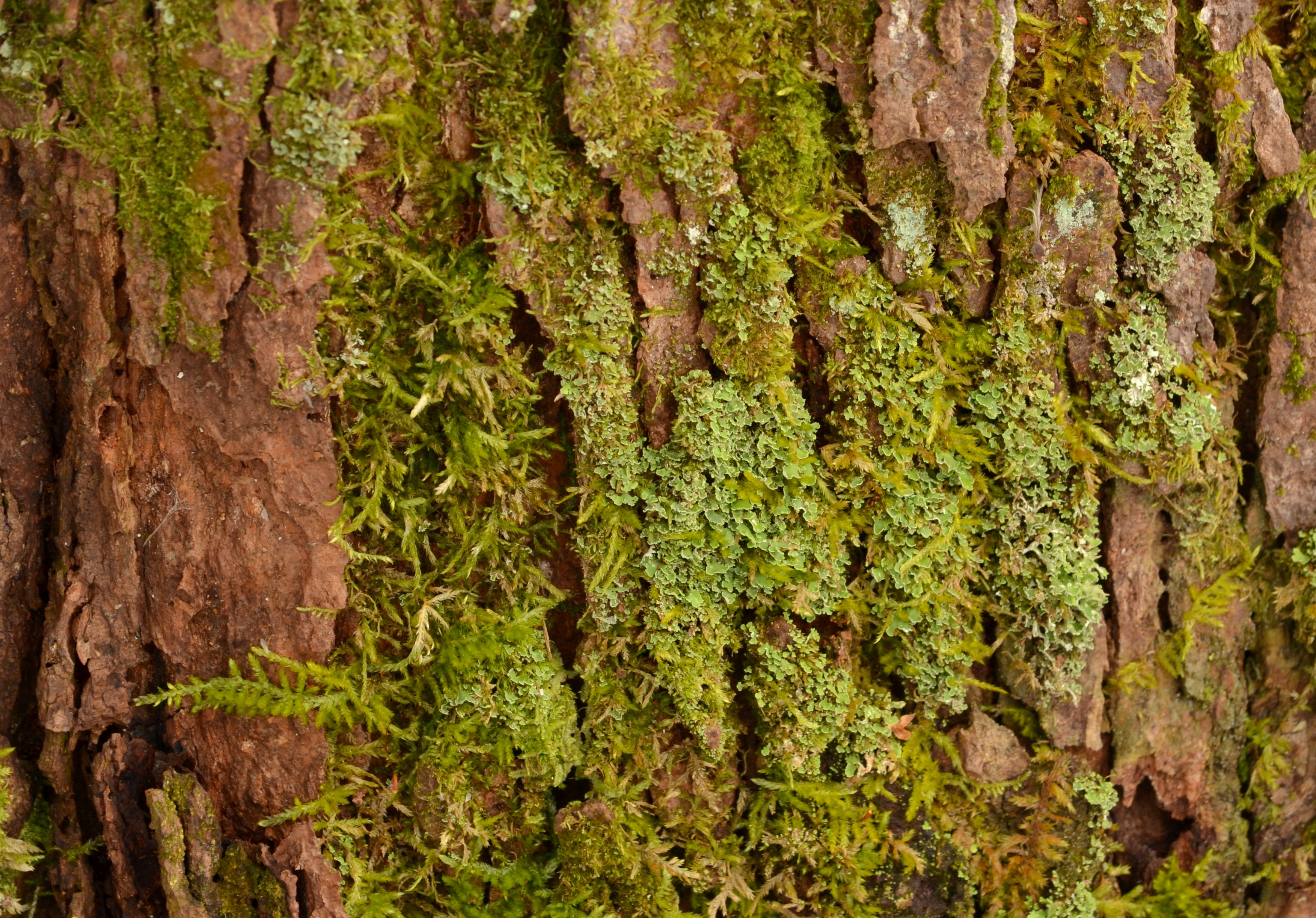

Here's another scene of tiny mosses and lichens among the crevasses of an old White Pine's bark:


Many of the trees had fuzzy socks made of moss:


And this moss almost seemed to be pouring out of this tree:


Back at the house, the persistent snow cover that's been around for months was receding, and our first Snowdrop buds were peeking through:


Then a storm brought another foot of snow, delaying things a bit.... But spring is certainly coming. Red-winged Blackbirds and Common Grackles are back in the area and singing, and as I write this, we're having a stretch of 60-degree and sunny days. Right now, I can see nearly equal parts bare ground and snow, I hear a Song Sparrow singing, and a pair of Eastern Bluebirds are checking out our nest boxes. The Snowdrops are uncovered again and I think they'll open today, our first flowers of the year. Here comes spring!

Friday, March 17, 2017

March Snow!

Well that was definitely a snow storm! We had heavy snow and wind throughout Tuesday and Wednesday, and then when it was all over, Thursday morning was clear, bright, beautiful, and very snowy:
 

The reported snowfall in the area was around 15 inches, but there was so much wind that some spots (like a patch of yard next to our house) ended up with almost no snow, while other spots (like the garden bed out front where some hopeful daffodils were thinking about blooming a couple of weeks ago) are now under 3-foot snow drifts. So I didn't get very far when I somewhat foolishly tried to walk in the Roy H. Park Preserve on Thursday morning without my snowshoes. I'd forgotten how hard it is to walk while repeatedly sinking into almost-knee-high snow! Before I turned around I was at least able to admire the walls of snow-covered conifers:
 

And I enjoyed these dainty alder catkins (not yet in bloom) that were dangling next to the path:


When I got back home, I strapped on my snowshoes and added another layer of clothing (it was sunny outside but the wind was intense!) and I headed back out to walk along the fields near our house. I wasn't about to miss out on one of the only substantial snowfalls we've had this winter!

I love the combination of snow and bright blue sky, and this sky was amazing:
 

The wind really was strong. Big clouds of snow kept blowing off the trees on a neighboring hillside:


And when I turned around after 15 minutes or so of walking, the wind was already working on filling in my footprints:
 

A Turkey Vulture soared overhead, showing off wing and tail feathers that look like they could be made of steel:


What a cool sight: huge majestic Turkey Vulture and huge billowy clouds:


One more picture:


I'm glad I got to enjoy these post-snowstorm sights. Today has remained sunny and beautiful, and our neighborhood American Kestrel even stopped by again, looking extra handsome in the bright afternoon light:
 

With all the sunshine, the snow is already on its way out. I'll be curious to see how long it takes for this snow to fully melt!

Saturday, March 12, 2016

More Raptors on Fence Posts

The Arcata Bottoms really are a haven for raptors (and shorebirds, and geese, and ducks, and so on...). In a previous post, I noted that the many fence posts around these pastures seem to make excellent perches for the wide variety of raptors that hunt here. After new visits to the Arcata Bottoms last weekend and again this morning, I have some more fence post sentries to add to the list, starting with this little American Kestrel (with lounging cows for a backdrop):
 

American Kestrels are our smallest raptors, but Merlins aren't much bigger, and these fence posts seem to be just the right size for those little hunters as well:
 

Aren't Turkey Vultures too big for these wooden posts? I guess not:
 

One Turkey Vulture on a roadside post let me inch up next to it in my car, at least up to a point; I'm pretty sure this is the closest I've been to a Turkey Vulture in the wild, and it took off (to land on a post further away) just after I took this picture:
 

Wow, what beautiful massive wings, and what a bizarre skull-like head. Turkey vultures are so cool.

While I'm already sharing sights from the Bottoms, how about some water birds? Three male Buffleheads paddled around together (while a group of several female Buffleheads hung out a little ways away):
 

And a big flock of American Coots demonstrated how cool their black-white-gray outfits look en masse:
 

We've had rainy and gray weather for what seems like forever at this point, but even when rain threatens at least I can drive through the Bottoms and still get to see new and interesting things!

Sunday, June 21, 2015

Welcome to California's North Coast

And here we go! I'm excited to say that for the next year or so, I'll be living and working in Humboldt County, California, all the way up in the northwestern part of the state. Think Pacific Ocean, giant redwoods, moderate temperatures year round.... This is a huge change from anywhere I've lived before, and it's kind of amazing.

In the week and a half since we arrived at our new home, Paul and I (along with my parents, who generously helped us move) have briefly visited a broad range of nearby natural places; our goal has been to get a basic idea of what's around here so we can explore them in more detail in the months to come. Basically, this is the tourist phase. So here's a sampling from our preliminary adventures in this new and exciting place. Consider this a teaser of things to come!

We're living on a peninsula between the Pacific Ocean and Arcata Bay, which means that just a few minutes drive from our house (or a 20-minute walk), we have vast expanses of beach:


We spent some time walking among the dunes and beaches at the Humboldt Coastal Nature Center and the nearby Ma-le'l Dunes, and I was pretty impressed with this alien landscape:


There are so many specialized plants on the dunes, with lovely flowers and interesting growth patterns, and all of them are entirely foreign to me. I'm looking forward to getting more familiar with the plants in my new almost-backyard. Here's some Yellow Sand-verbena (Abronia latifolia) and Purple Owl's Clover (Castilleja exserta) to get things started:


I was happy to meet lots of White-crowned Sparrows who were raising families in the dunes' shrubby growth, since I'm at least passingly familiar with these birds from back east. This adult was chirping through a beakful of caterpillar:


A juvenile White-crowned Sparrow made an appearance as well:


I've never before lived in a place where Common Ravens are actually common, so it's pretty cool that I've already seen these birds several times around here. This raven sat on a tower near the nature center and made a weird gurgling sound that we thought at first might come from some sort of amphibian:


Another raven showed up on the same tower an hour or so later; with those bits of pink skin at the corners of its beak, I'm guessing this is a juvenile:


At the shore, there were even more things to see. Look, waves!


A big flock of Marbled Godwits was working over the wet sand:


I guess there are some tasty critters in there:


This godwit walked along the beach then did a double-take and rushed back to a spot it had just passed:


It pushed its beak deep into the sand and pulled up... I'm not sure what kind of creature:


It was a big prize, whatever it was, and the godwit had a bit of a hard time swallowing it:


But it got it down eventually. I have to say, I'm impressed by these birds' skills at hunting out such buried creatures:


One of the most amazing sights on the beach the day we visited was the hundreds of washed up By-the-wind Sailors (Velella velella), beautiful blue jellyfish-like creatures (actually colonies of hydrozoans) that float across the open ocean with the help of their stiff "sails":


I think I knew such creatures existed, but I'd certainly never seen one before, and apparently they only wash up on shore under certain unusual conditions. What an amazing encounter!

So we've got easiest access to sandy beaches and dunes, which I'm sure will provide us with tons of entertainment. Driving north up the coast, the shoreline becomes more rocky and intense. We explored a bit of Patrick's Point State Park, which features some dramatic cliffs along the ocean:


Big rocks just offshore are obviously popular resting spots for birds (like the assorted cormorants on the left):


There are a lot of ocean birds here that I'll need to learn. Small groups of Common Murres (this group accompanied by a cormorant) flew over the water and fished in the waves:


A family of hyperactive Chestnut-backed Chickadees was busily eating seeds from the conifers in the park:


It's so cool to see chickadees in these new costumes; I think the chestnut vest is very handsome indeed:
 

And it's nice to see a Turkey Vulture's familiar face (these big birds are all over the place out here):


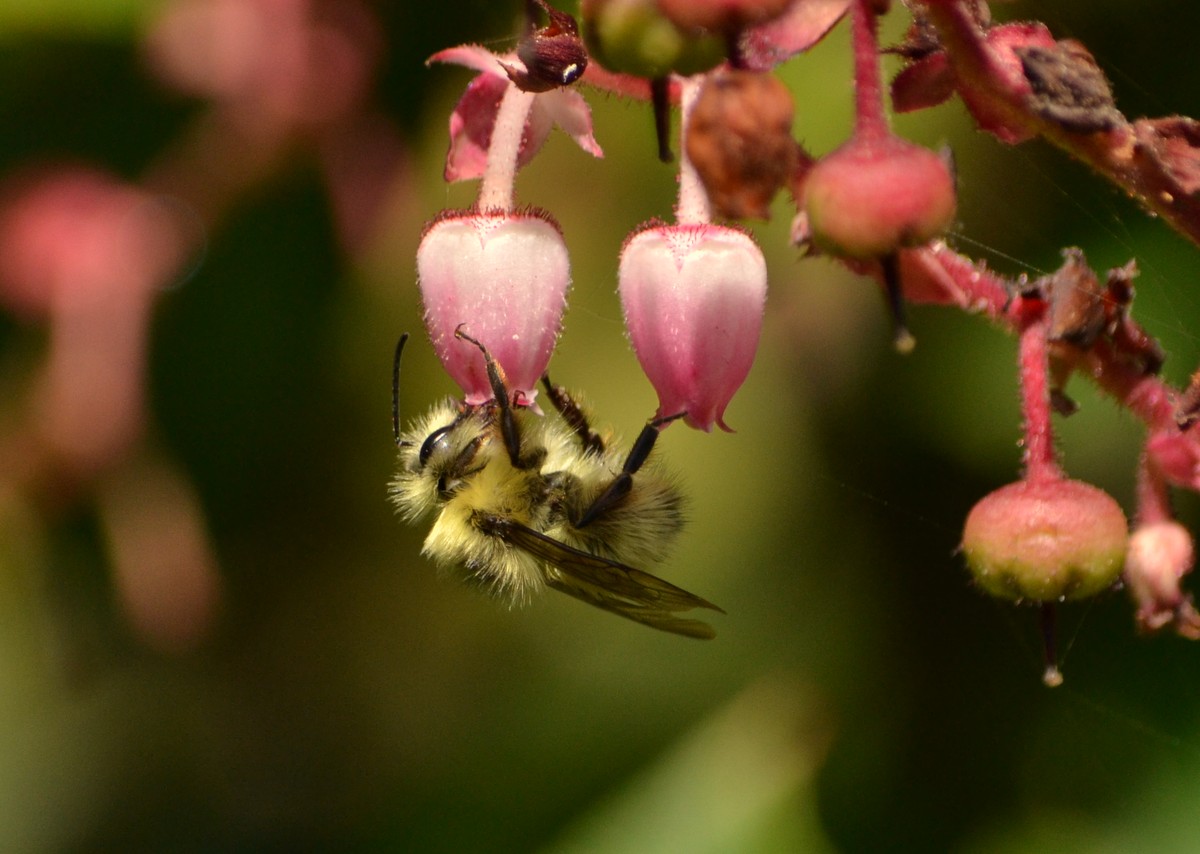
This super fuzzy bee was feeding from almost-as-fuzzy Salal (Gaultheria shallon) blossoms:


And on a stone/sand beach neighboring Patrick's Point, we found a small grasshopper (possibly in the genus Microtes) with some of the best camouflage ever. See it?


How about now?


I especially love the grasshopper's patterning from above:


OK, beaches and dunes and rocky shores are all amazing, but here's maybe the coolest part about our new home: A half hour drive gets us to the Redwood National and State Parks, which protect over 40% of all remaining old-growth Coast Redwood (Sequoia sempervirens) forests. Some of these trees are really ancient (upwards of 2000 years old), and these are the tallest trees in the world. I mean, that's pretty awesome. For our first foray among these ancient trees, we walked the Lady Bird Johnson Grove trail, which features old-growth redwood and Douglas Fir trees; these aren't the biggest examples of these trees (because the trail is at a higher elevation than some other parts of the forest), but they're still pretty darn tall:


We spent a lot of time just looking up and marveling at these giants:


I absolutely loved wandering through this forest:


There were lots of interesting flowers growing on the forest floor. Here's a carpet of Two-leaved Solomon's Seal (Maianthemum dilatatum):


And a lovely mixture of Redwood Violet (Viola sempervirens) and Western Rattlesnake Plantain (Goodyera oblongifolia) -- my first northwestern orchid (although it's not blooming yet):


A warbler (Wilson's Warbler, I suspect, although I didn't get a good enough view to confirm that ID) quickly crossed our path with food for its family:


And that's it so far. I've got tons of new animals and plants to learn about (my Western North America bird book should be arriving any day now) and so many new environments to explore in more detail. I can't wait!