Sunday, December 31, 2023

Mid July - Early September, 2023

2023 is almost over, so it's time to finish catching up with this year's sights from around our property! In the previous post, we got up to the middle of July. Let's take it from there! This post shares some highlights from the rest of summer in our yard, meadow, and woods; and then I'll finish up the year (fall and early winter) in another post.

Late in the afternoon on July 29, I heard some strange noises and saw flashes of a small long mammal darting between clumps of brush in our yard. The daylight was fading, but I grabbed my camera anyway, because I'd never seed a weasel-type creature in our yard before. (All previous sightings on our property have been courtesy of the trail camera in the woods.) Sneaking around the area, I must have accidentally ended up in the creature's intended path, because a Long-tailed Weasel came directly toward me, suddenly found a human blocking its way, and dropped the baby rabbit it was carrying at my feet. I guess we were both surprised! I backed away a bit, and the weasel came back and snatched up its meal again:

The weasel carried the rabbit to a spot behind our shed, and then it came back along the same route and repeated the process at least five more times (I lost count) while I watched from nearby. That's a lot of baby rabbits! I was wondering at the time whether the weasel could have been gathering food to feed its own young, but I've also read that weasels sometimes cache food -- more than they can eat at one time -- so maybe that's what was happening here. In any case, it was pretty amazing to see this confident and capable little hunter at work! All my picture attempts were blurry, but this gives an idea of the action at least:

While all this was happening, a Mourning Dove was watching from its nest in a tree right over the weasel's path:

Yikes, being a nesting bird sure seems perilous. Here's another picture of this Mourning Dove the next day, in better light -- this nest didn't ultimately succeed, and I don't know whether that was because of the weasel, or another predator, or some other hazard:

I had a lot of fun this summer trying to take pictures of Ruby-throated Hummingbirds as they visited the various hummingbird-friendly flowers in our yard. I don't keep hummingbird feeders, but it turns out that many of the (mostly native) flowering plants I've added to our property over the years (and some of the annual flowers I grow, too) are great feeding stations for these lovely little birds. It seemed like we had hummingbirds around pretty much all the time this summer, so there were lots of opportunities for pictures.

The big orange flowers on our Trumpet Creeper vine are always a big hit with the hummingbirds (and there are always many big black ants on these flowers, too) -- here's a hummingbird visiting these flowers on July 30:

I've noticed that hummingbirds visiting Trumpet Creeper flowers tend to leave with white foreheads, thanks to a generous dusting of pollen:

The Scarlet Runner Beans I grew in my vegetable garden this year were also popular with the hummingbirds, and I so loved having these birds come visit while I was in the garden. Here's the same bird from the above pictures again, now shifted to Scarlet Runner Bean flowers (also on July 30):


And here's a closer picture of another bird on August 13:

After visiting the bean flowers, this hummingbird perched for a bit on top of a post in the garden (I wonder what all that white stuff is along the top of its beak):

Look, a hummingbird tongue! Wow, what a cool little bird:


Ever since I planted Cardinal Flowers in our yard back in 2017, I've been hoping to get a good picture of a hummingbird visiting these flowers, and I finally managed it this year by peeking through our living room window and using our house as a blind on August 13:

Ah, I love these flowers, and it's so awesome to see them with their primary pollinator. And this was the first time I really got to see this flower's pollination mechanism at work! While the hummingbird drinks, the flower gives it a little pat on its head -- soooo cool:


The Coral Honeysuckle I planted in our yard last year bloomed for the first time this year, and the hummingbirds were very much into these flowers, too. Here's a bird visiting these flowers on September 4:

This bird was even able to perch on the honeysuckle's vine while feeding from these flowers:


What a sweet bird:


And here's one more picture from September 4, since this bird's feeding route also included the nearby New York Ironweed flowers:

There are always tons of flowers around here during the summer, and here's a small selection of some other blooming plants that caught my attention this year. Enchanter's Nightshade (Circaea canadensis) grows in our woods, and I love its dainty flowers and its whimsical name; this picture is from July 21:

Narrow-leaved Meadowsweet (Spiraea alba) -- also pictured here on July 21 -- produces its puffy sprays of white flowers at the back edge of our meadow:

Pokeweed grows abundantly in our yard and meadow, and birds enjoy its purple berries in the fall; I admired these Pokeweed blossoms on July 26, with white spheres opening to reveal green globular structures:


And a bee was also enjoying these pretty Obedient Plant flowers in our front yard on August 13:


And here are a few more assorted sights!

A juvenile (pink mouth) and adult (dark mouth) Blue Jay making a noisy scene in the yard on July 20:


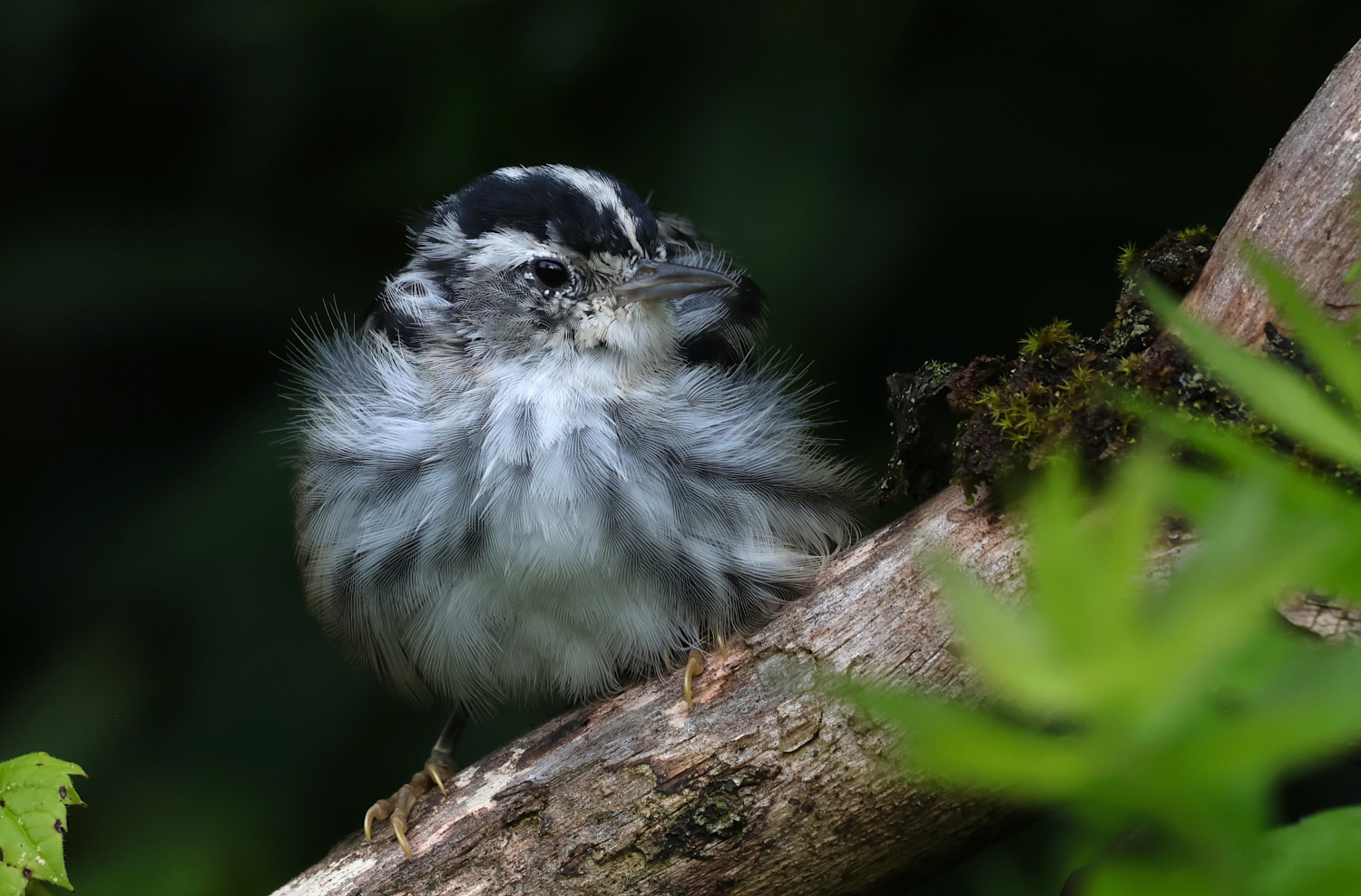
A very puffy Black-and-White Warbler that let me approach unusually close on July 21 -- I hope this bird was OK! It moved along soon after I took this picture:

A couple of Red Efts (juvenile Red-spotted Newts) ambling over the ground in the woods, this one on July 21:


And this one on August 13 (I have a hard time resisting an opportunity to hang out with these little creatures!):


Bunches of abundant Chokecherry (Prunus virginiana) berries on July 21:


A young American Bullfrog at the small pond in our woods on August 13:


A fantastically strange female American Pelecinid Wasp (Pelecinus polyturator) in our yard on August 23:


Here's another view of that same wasp:


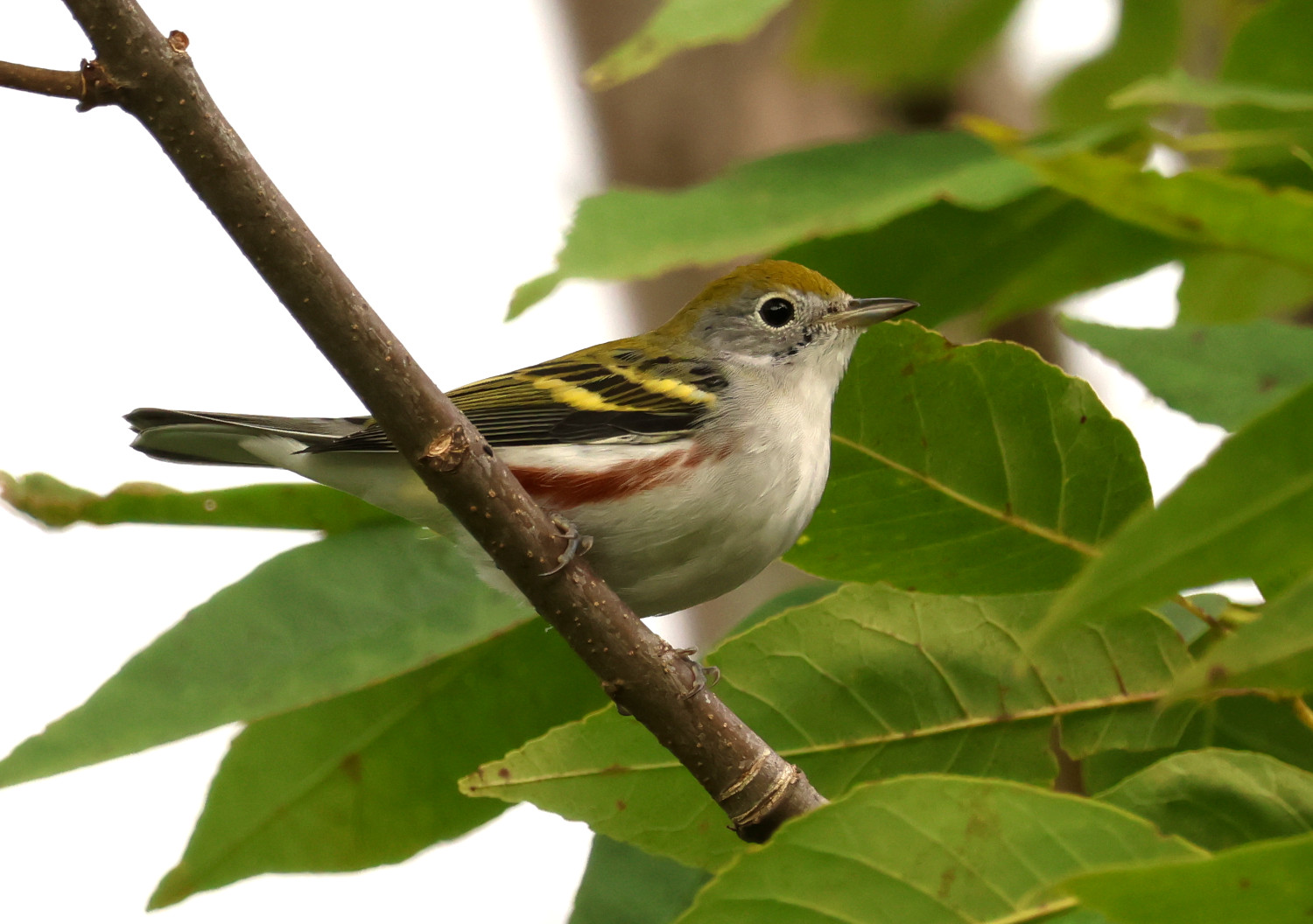
A Chestnut-sided Warbler in its muted -- but still beautiful -- late-summer costume on August 24:

A young White-tailed Deer starting to grow out of its spots, seen in the woods on August 29:


Another view of this same deer, as it tried to figure me out:


A sleepy bee underneath an aster bud in the late afternoon on September 1:


And a view on September 4 from beneath the Black Cherry trees covered with Virginia Creeper vines at the edge of our woods:

Finally, here are some assorted clips from the trail camera in the woods during July and August. This video features a young White-tailed Deer browsing along the trail, two Coyotes, a Ruffed Grouse (possibly a male, with those dark feathers on the sides of its neck), a deer sniffing the camera, and a family of American Crows taking a stroll down the path:

Summer is such an abundant time, and this year was full of fun and interesting sights, as always! Next up: sights from fall and early winter. :)

Sunday, November 5, 2023

A Black Raspberry Feast, and Other Early-Mid July 2023 sights

Let's go back to July! (It seems I'm currently four months behind with posting sights from our property -- that's actually not bad for me at this time of year!)

This was an especially great summer for wild berries around here. The Black Raspberry plants produced lots of fruit in first half of July, and in August the Blackberries produced just so many berries, way more than I've seen in previous years on our property. Of course, it helps that we're letting these plants gradually expand from the edges of the woods into the meadow and in a spot near the house; with more plants each year, it makes sense that there would also be more berries. But even the shaded plants in the woods produced many more berries this year than I usually see. In any case, and whatever the reason, this was the summer of berries, and there was plenty of fruit for both people and animals!

Happily, this year I also figured out that the Black Raspberry patch at the north side of our house is perfectly situated for picture-taking through an open window, with our house acting as a big blind. It's nice to be able to watch visiting creatures from nearby without scaring them away. On July 10, this Eastern Chipmunk spent several minutes grabbing and munching on Black Raspberries (what happened to your tail, chipmunk?):


Got one:

Here are some more pictures of this little fuzzy creature enjoying the Black Raspberry feast:


A family of Baltimore Orioles was making good work of these berries, too. This juvenile oriole helpfully posed in the open for a bit, showing off its orange/yellow-splotched breast and berry-stained beak:

This young bird's wings and back are so neat and pretty:


And it looks like this bird even got some sort of insect snack in between berries:


This Rose-breasted Grosbeak (an adult female? or juvenile?) came near the Black Raspberry patch during this photo-shoot, too, but I'm not sure whether it was actually eating the berries. I like how pretty this bird looks perched here among still-green Chokecherry berries and glowing white Common Elderberry blossoms in the background:


On July 13, I spent some more time watching the Black Raspberry patch through the open window, and although I didn't get any more pictures of birds eating berries, I did see this cute Chipping Sparrow very close up as it foraged in the mowed area of our lawn:


And this Tiger Swallowtail made a lovely sight on Purple Coneflower blossoms:


And I couldn't resist taking a picture of the nearby Coral Honeysuckle (Lonicera sempervivens), blooming for the first time after I planted it here last year; what a beautiful plant, and native (and yes, it was a big hit with the hummingbirds this year):


On July 19, this handsome American Robin perched on top of the Coral Honeysuckle's arbor with its beak full of honeysuckle berries, but these from the non-native bushes that grow invasively around here:


Here are a few other assorted sights from early-mid July.

A soaking wet Blue Jay emerging after a rainstorm on July 3:


A mother White-tailed Deer and one of her fawns (the second fawn was also nearby but outside of the frame) munching on the Black Raspberry plants (and maybe berries?) next to the house on the evening of July 6:


A juvenile Rose-breasted Grosbeak in the apple tree near our deck on July 10:


This young grosbeak had a nice grooming session while I was nearby, so here are several pictures of this bird in many interesting poses, showing its lovely yellow underarms and other usually hidden features of its costume:


I love having families of Rose-breasted Grosbeaks around our yard every summer, even though the young birds always take some bites out of the tallest-growing plants in my garden -- especially peas and winter squashes, and sometimes they nibble on other vegetables, too. Actually, I think these birds helped me out with my squashes this year: they nipped off the growing ends of my most vigorous squash plants when they reached the top of the trellis, which made the plants send out a bunch of new growth points, and these plants ended up making way more flowers and fruit than I was expecting. Thanks, young grosbeaks!

Finally, here's a picture of a baby Eastern Phoebe in its nest in our shed on July 13 (there are some more babies hiding down in the nest, too); this was our phoebe pair's third nesting attempt this year, and the only successful one, after the first two attempts were parasitized by Brown-headed Cowbirds:


I'll close this post with some video clips from the trail camera in our woods, taken on July 5-18, and featuring a Blue Jay eating Black Raspberries that were growing next to the trail, a raccoon and three babies, a Virginia Opossum, an adult Ruffed Grouse with excellent camouflage (and I think some babies rustling around in the undergrowth), a Wild Turkey, and a Gray Squirrel also munching on Black Raspberries -- a fitting end to this berry-full post:


It's nice to look back at the height of summer as the days are now getting shorter and colder. And I still have more summer sights to share. More in a future post!

Monday, September 18, 2023

May-June, 2023

I've already posted about the Eastern Bluebirds who raised their families in our yard this spring and summer, but we had a lot of other cool sightings during that time, too! Here are some highlights from our property during May and June of this year.

May is peak migration time, and it's always fun to get glimpses of the birds that pass through our yard on the way to their summer breeding grounds, near or far. Here's a White-crowned Sparrow on May 7, pausing briefly here during its journey to somewhere in northern Canada:

Migration also meant that we added three new bird species to our yard list in May this year, bringing our total list of bird species seen and/or heard on our property to 116! (Wow!) Bird #114 was a Least Flycatcher who was hunting and calling from a big apple tree in our meadow on May 7 (thanks to Merlin's sound ID feature for helping me to confirm this little bird's identity). Bird #115 was, incredibly, an Eastern Whip-poor-will who called for a few minutes after 9:00 PM on May 11; the bird was singing from somewhere beyond our property, but it was loud enough that I heard it from inside the house. (Eastern Whip-poor-wills are rare around here, and I expect that this was a once-in-a-very-long-while event.) Bird #116 was a Prairie Warbler who moved quickly through our yard, singing a few times, on May 28.

Of course it's also wonderful to come across birds that I see more regularly, especially birds who are only around during the warmer months. This Broad-winged Hawk circled overhead for a bit on May 7; I'm fairly sure that these hawks nest somewhere in the woods bordering our property, but I don't know whether this individual was here to stay for the summer, or whether it was planning to move on:


This male Common Yellowthroat was singing insistently at the edge of the meadow on May 14, perhaps establishing his territory for the season (this is another species that breeds here):


Also on May 14, this male Scarlet Tanager made a nice contrast with newly emerging Shagbark Hickory leaves and flowers:

Just a few days after I took that picture, we had a late hard freeze that destroyed most of this Shagbark Hickory's leaves (and many emerging leaves on other plants, too). This tree and pretty much everything else recovered fine, but it was tough to see so much blackened and bare plant life in the second half of May.

On May 16, I got to admire this Black Swallowtail butterfly up close after it emerged from a chrysalis that overwintered in our unheated mudroom:

Downy Woodpeckers had a nest in a partially-dead tree at the edge of our property this year. I didn't get to see the babies, but I certainly heard them, and the parents made frequent visits. Here's the male at the nest hole on May 27:

On May 30, this Eastern Chipmunk was stuffing its cheeks full of Silver Maple seeds that had fallen from the tree in our front yard:


Those are some big cheeks! And I love this view from behind:

On May 31, a swarm of Honey Bees settled briefly high up in the branches of an oak tree in our front yard:


I'd never seen a Honey Bee swarm in person before! Here's a closer view -- wow, that's a lot of bees:


I didn't take a whole lot of pictures of wildflowers during this time, but here's an especially floriferous Starflower plant along our woods path on June 2; I don't usually see three of these lovely blossoms on a single plant:


And I was pretty well blown away by the Wild Lupine display in our meadow this year. I wonder if these plants were helped along by the extremely dry May we had, or maybe they've just been really successful at increasing their population each year (despite the ever spreading goldenrod). Whatever the reason, there were more lupine flowers in the meadow this year than I've ever seen before, and it was glorious. I'm so glad these plants took off when we scattered their seeds after excavation work in the meadow in 2017! Here's a view of a small portion of the lupine show on May 31:


And a wider view on June 2:


I loved seeing some variations in colors among different plants, like these bicolor white-and-purple flowers on June 4:


These flowers were a big hit with the pollinators, too. Here's a Honey Bee enjoying the lupines on June 5:


This male Brown-headed Cowbird was looking fancy in newly emerging Redbud shoots on June 6 (after the tree's first attempt at new growth was entirely destroyed in the May 18 freeze):

In the woods on June 15, I happened to spot a Small-eyed Sphinx (Paonias myops). This moth was doing a very good dead leaf impression, dangling by its front legs from a Multiflora Rose stem:


Up close, this moth's wings look to me like they're decorated with gold leaf; ah, so pretty, and the shapes of these wings are so interesting:


(Incidentally, Multiflora Rose is one of those nasty invasives that I'm trying to gradually remove from the property; there's quite a lot of it out there, but it hasn't totally taken over any areas yet, and I've been making slow but steady progress each year. My strategy this year was to cut some plants to the ground and place a wide flat rock over each stump, and that actually seemed to work pretty well, as long as the rock was wide enough. Last year, I tried cutting down plants and treating the stumps with triclopyr, which mostly worked, but some of the plants still regrew. We have an abundance of wide flat rocks on the property, so I'll likely keep going with that strategy for now.)

On June 21, I saw one of our Eastern Phoebes hunting in the meadow, using young trees as convenient perches:


Here's another picture of this lovely bird perched on a small hawthorn sapling:


(I wonder how long it will be before this area is no longer quite a meadow, with small trees and shrubs moving in. I don't feel the need to maintain this strictly as a meadow, and I'm very curious to see how this landscape will change over the years.)

Also on June 21, a couple of Ovenbirds in the woods came near me and made sharp sounds and generally made it clear that I wasn't welcome -- I think they may have had a nest somewhere near the path. Yes, you are bold little birds, and also adorable:

Speaking of adorable, here's a young Tufted Titmouse at the edge of the meadow (also on June 21):


On June 29, I was surprised to see a juvenile Dark-eyed Junco grooming itself right in the middle of a small table on our back deck:


This little bird then sat on the table for several minutes, apparently resting -- it didn't seem to be hurt, and it flew away after a little while, but it was definitely strange to see this young bird lounging on our deck furniture:


Finally, our trail camera in the woods picked up several cool sightings in June, so here's a small selection of clips, featuring: 

  1. Our first sighting of an American Mink on our property. This was a surprise, because I've only seen mink around water before! But this mustelid-type creature was too big to be a weasel and too small to be a Fisher (both of which have appeared on the camera in this spot in the past), and there are wetlands just a little further downhill from here; and it sure looks like a mink.
  2. An Ovenbird doing its chicken-like walk across the log.
  3. A mother White-tailed Deer and her twin fawns.
  4. A Raccoon with two babies (and sounds!).


And that's it for May and June! As I'm writing this, the fall season is arriving (yay, fall!), but the next posts on this blog will feature summer sights. Next up: July!